What technology would you be better off without, why?
By Tracy Schruder
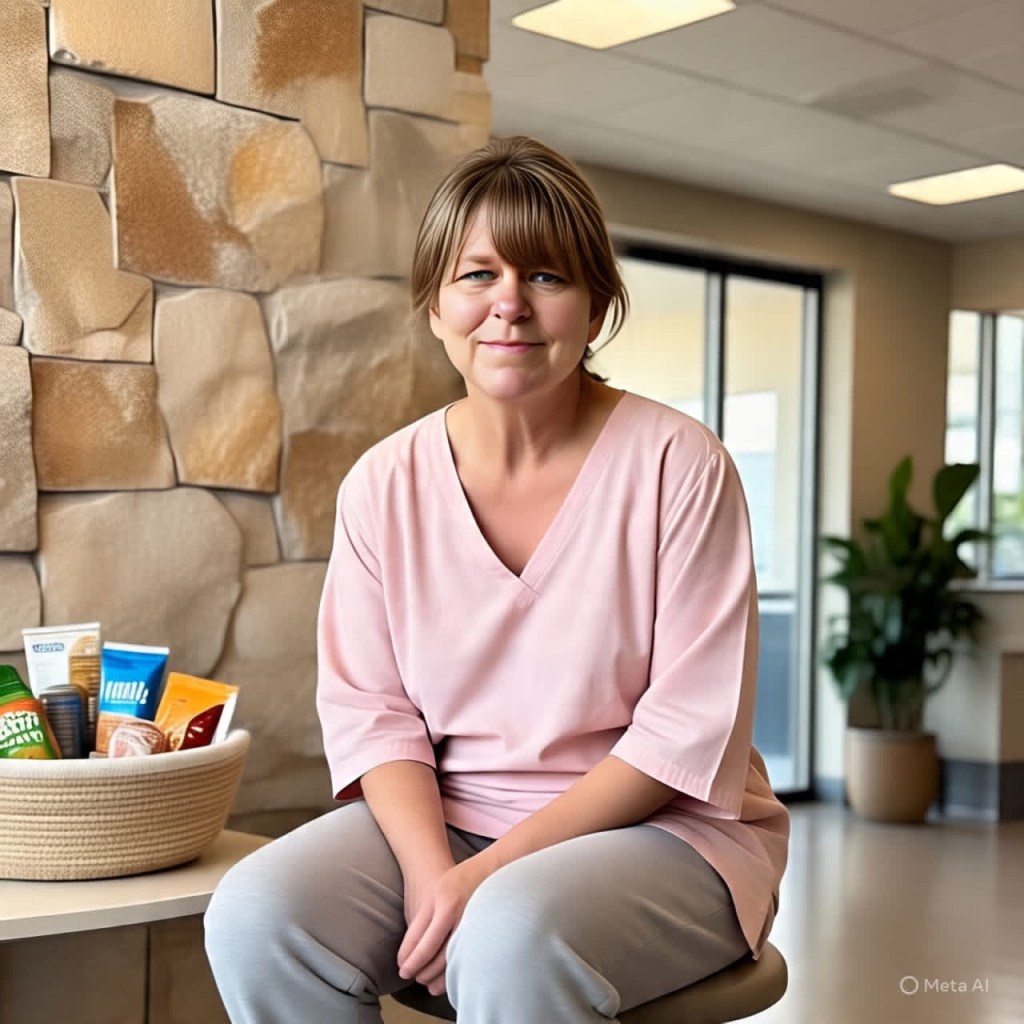
I would’ve been better off if I’d never believed processed food was real food. I can live without it now. I learned that the hard way—there was no other choice but to eat healthy.
I spent most of my adult life consuming processed foods, restaurant meals and take‑out. As a kid, my mother rarely served anything processed, except for canned beans, hot dogs, cheese slices and lunch meat. I didn’t know any better, and I didn’t care. Mom was a good‑old‑fashioned “make it from scratch” kind of lady.
But once I moved out, I didn’t cook much. If I did, it was so handy to just open a box or a can and have a meal ready in under an hour. That, mixed with unhealthy eating out for over twenty‑some years, finally caught up with me. I packed on way too much weight. I never felt hungry, but I never felt satisfied. My blood pressure shot up and my doctor threatened medication if I didn’t get it under control.
I didn’t listen at first—until I got physically ill. I got really sick. It got so bad I couldn’t eat anything without having an attack. I tried to eat healthy, but my body rejected it. It was an eight‑month painful period of discomfort and discovery. I was given some medication and it worked.
Now I’m seeing a dietitian and I eat only non‑processed foods. Thank heavens it’s working. I have more energy to exercise and do the things I enjoy.
I reconfirm that the one technology I can live without is poorly processed food. Processing strips good living food of nutrients and vitamins.
We need real, good food to survive and stay healthy through our lifetime.
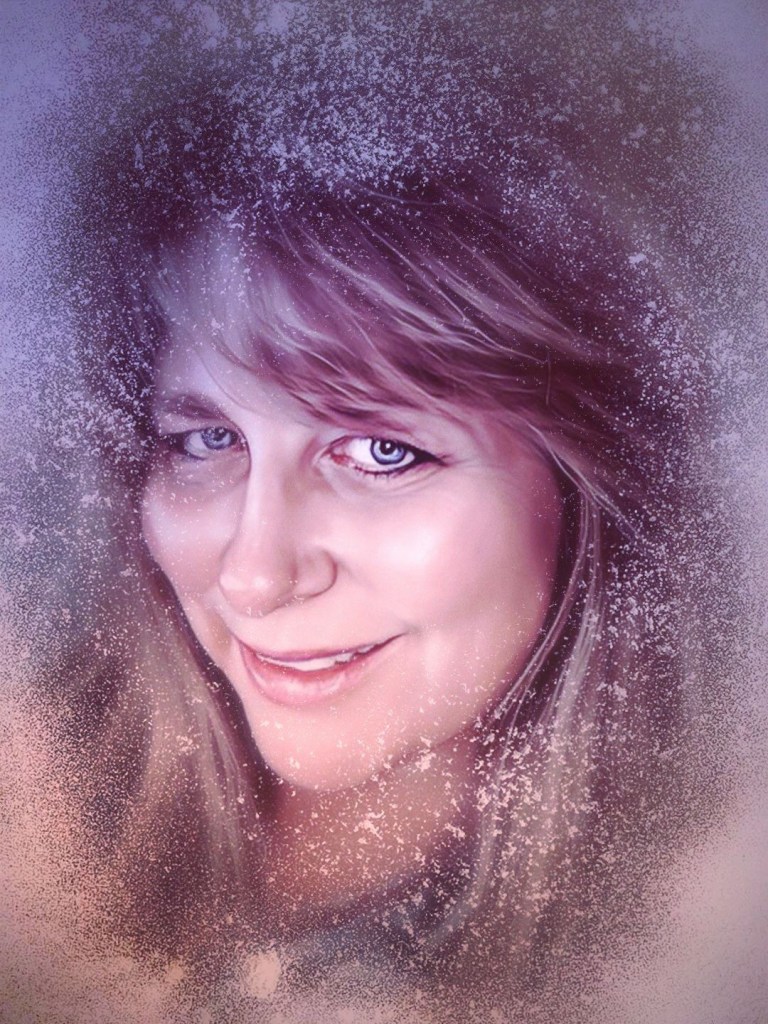
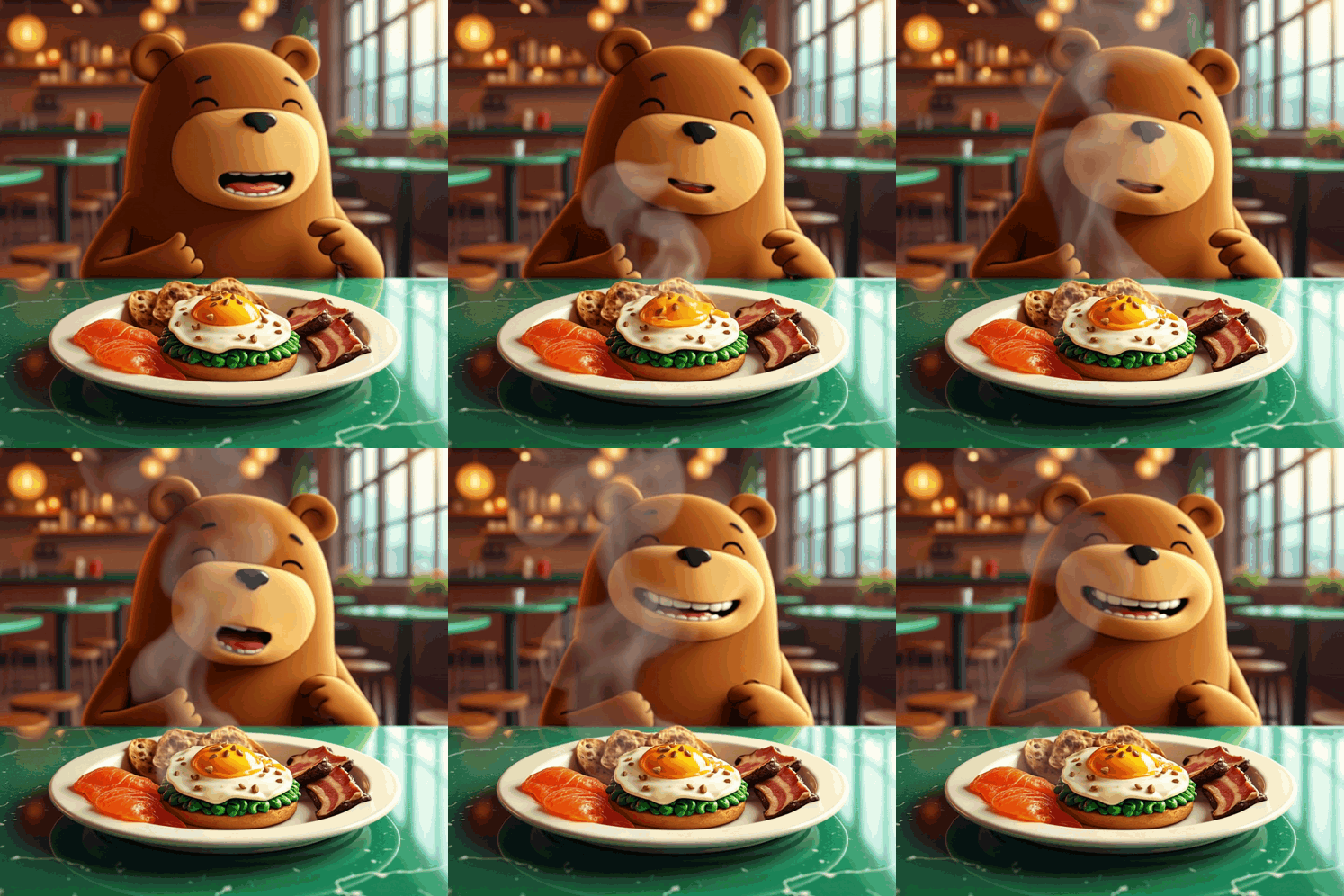
Everyone looks better when they smile. Our smiles are the perfect accessory for any ensemble. I enjoy smiling. Smiling can boost your mood, here’s some information about smiling:
Facial Feedback Hypothesis:
This theory says that just moving the muscles needed to smile sends a “hey, I’m happy” signal to the brain. Even if you’re not feeling joyful, the brain interprets the facial cue and releases feel‑good neurotransmitters. Studies show that people who hold a pen between their teeth (forcing a smile‑like pose) or mimic a grin feel a bump in happiness.
Neurochemical Boost
When you smile, your brain dumps dopamine (reward), endorphins (natural painkillers), and serotonin (mood stabilizer). These chemicals not only lift your vibe but also lower cortisol, the stress hormone.
Physical Benefits
Smiling can drop heart rate and blood pressure, acting like a quick stress‑buffer. In experiments, folks who smiled during pain had lower heart rates and reported better emotional recovery.
Social Contagion
A smile is contagious—seeing someone grin triggers mirror‑neuron activity, making you smile too. This creates a positive feedback loop that amplifies good feelings for both the smiler and the observer.
Real‑World Evidence
Large‑scale collaborations (19 countries, ~3,900 participants) found that voluntarily posing a smile—either copying a photo or moving facial muscles—did increase self‑reported happiness. However, the pen‑in‑teeth trick (a “covert” smile) showed mixed or weak results, meaning the effect needs authentic muscle activation.
Bottom line: The simple act of smiling engages brain chemistry and social cues that genuinely improve how you feel, even when the grin starts out “fake.”
✍️ SOURCES ✍️
Smiling has been studied extensively. When they tell you that your smile is your best feature, believe them.
Our smile is our best feature. It’s always more comfortable to be greeted with a smile, especially in difficult circumstances. I’ve been told that my smile lights up a room and touches hearts. Maybe I was simply born with a beautiful, friendly smile—I just never realized it. I never put much effort into it; I smiled naturally or for pictures.
I didn’t catch the link between smiling and laughing until I started paying attention. I studied my smile in the mirror, learning to recognize the fake, annoyed, hurt, sarcastic, smitten, empathetic, humorous, and loving versions. If I couldn’t find a mirror, I snapped a picture. I examined my whole face, noting the difference between fake and genuine.
I played with it, even learning to fake a genuine laugh or smile to lift others up, even when my heart wasn’t in it. I noticed how my nose crinkled, my frown lines deepened, and how the genuine smile gathered wrinkles around my eyes.
Thankfully, I don’t have to fake it much these days—life gives me so many reasons to smile. I’ve found that smiling at myself in the mirror, when no one else is there to share a grin, boosts my happiness and confidence.
My smile is my all time favourite thing to wear! If you ever see me, you’ll see me smiling.
My Jewels
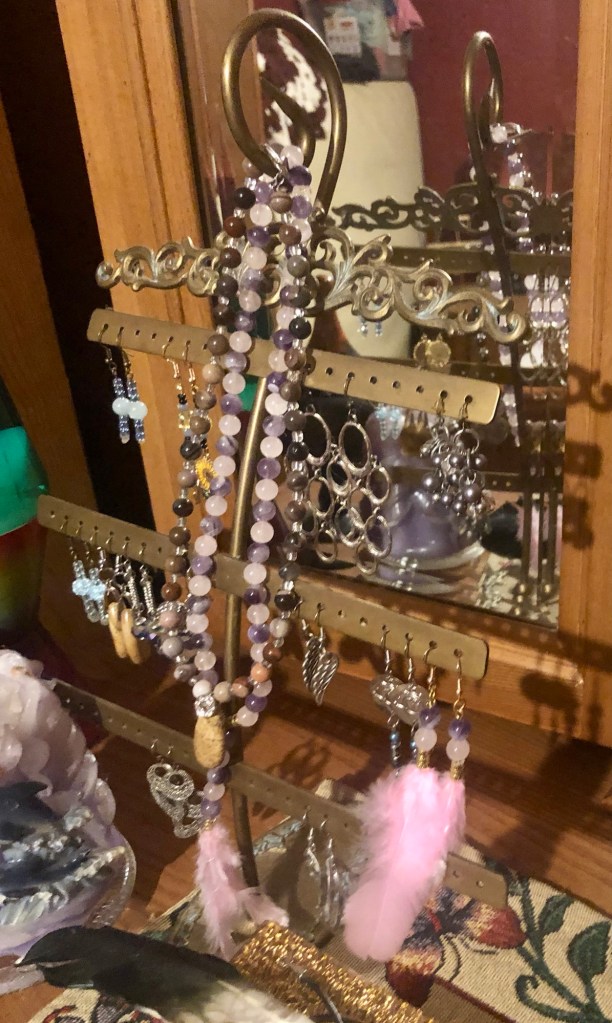
I absolutely adore wearing my jewelry. I am fascinated with precious and semiprecious gemstones. I make my own jewelry from gemstones.
I make bracelets, necklaces and earrings—and I’ll craft keychains or dreamcatchers on request. Every piece is set with gemstones. I absolutely love making things with gemstones.
I especially love having a different set of gemstones jewelry for every outfit I wear. I don’t need a special occasion or a night out to don my jewelry—I wear it every single day.
I also feel that energetic charge from certain stones. Sometimes I pick my jewelry based on what the day holds. Need to be razor‑sharp? I’ll wear lapis lazuli. Ditching a bad habit? Amethyst is my go‑to. Need to spread extra love? Rose quartz does the trick. My jewelry is my second favourite thing to wear.
What’s the hardest decision you’ve ever had to make? Why?
By Tracy Schruder
The hardest decision I’ve ever made was to stay. I stayed amongst the chaos and the heartbreak. To stay connected to the unconscious realm. I stayed connected with my roots. I even made the decision to stay even when it broke me a bit. I chose to stay when everyone else left, to stay when no one else could work the shift. I chose to stay in my faith when others left me because of it. I stay in the moment to witness it all. I stay without reason, to hold the space for those who need it. I choose to stay in the divine energy of love and wellbeing even when I was being criticized for it. I chose and choose to stay the course.
Why? Because I grew in a state of stay. Everything that did not kill me made me stronger.
I Stayed to feel each sliver in my heart, plucked out by my presence, expecting each wound to slam shut through healing. I chose to feel the pain and do it anyway. I am here and I am who I am because I made the hardest decision to stay. No matter what comes, I stay.
If you didn’t need sleep, what would you do with all the extra time?
By Tracy Schruder
What about dreaming? I need dreams. If I’m not sleeping, how could I dream? I’d use my time to learn how to sleep and then teach others how 😉. I enjoy sleeping—shutting down like that is a soft, soothing feeling like no other. It’s the only time we can actually achieve this state. Alpha, Beta, Theta can be reached through deep trance or meditation, but that isn’t true for your average person. For the average person, falling into a deep sleep is the only time they reach these vibrations or states.
Everyone dreams whether they remember the dream or not. It’s not only sleep that is important for our overall mental health—it’s dreaming too. Dream benefits feed imagination, help us identify our senses. Additional benefits of dreaming:
Mental:
Boosts creativity & problem‑solving
Enhances memory consolidation
Supports emotional processing
Emotional:
Helps regulate mood & reduces anxiety
Allows safe rehearsal of fears
Physical:
Strengthens immune function
Supports growth & repair
The living world often leaks into the dream world—or vice versa. Déjà vu is one way in wake, and the feeling during sleep that something isn’t quite real. There are ways you can know you are dreaming, but you can’t control the dream. You can control your reality.
I often stop in my dreams and in my waking life and ask myself, “Am I dreaming right now?” Then I poke my index finger into my left hand. If I’m dreaming, my finger pokes through my palm. This is called lucid dreaming. I have studied this process for a few years now, hence I write of my dream‑journal entries in other blog posts.
I conclude with this: I would find a way to sleep even if I didn’t have to. So I’d sleep if I didn’t have to sleep 😴😂
I mean, you’d have to be hanging on to some sort of inconceivable payoff, to let an annoyance last for more than 12 minutes because after that the body stops producing the hormones associated with that emotion and if you stay annoyed for any amount of time after that, it’s self created.
2. That some people can’t get over themselves:
That some people believe they are entitled to the peeve and reserve the right to their resentment, doing more harm to themselves in the long run. (Letting go is the key to overcoming!)
3. That some people actually complain about things that they can’t control. :
We can never ever change the things we can’t control by complaining about them. Frustration will only build for the lack of a satisfying solution.
Conclusion
My advice, for whatever it’s worth is “don’t let the small stuff take up big time. Annoying things don’t deserve a pinch of coon poop. My favourite mantra for dealing with this in the title on this post “Don’t peeve me off, mandingo!” It makes me laugh- for some reason and things don’t seem so ‘peevey’ afterwards.
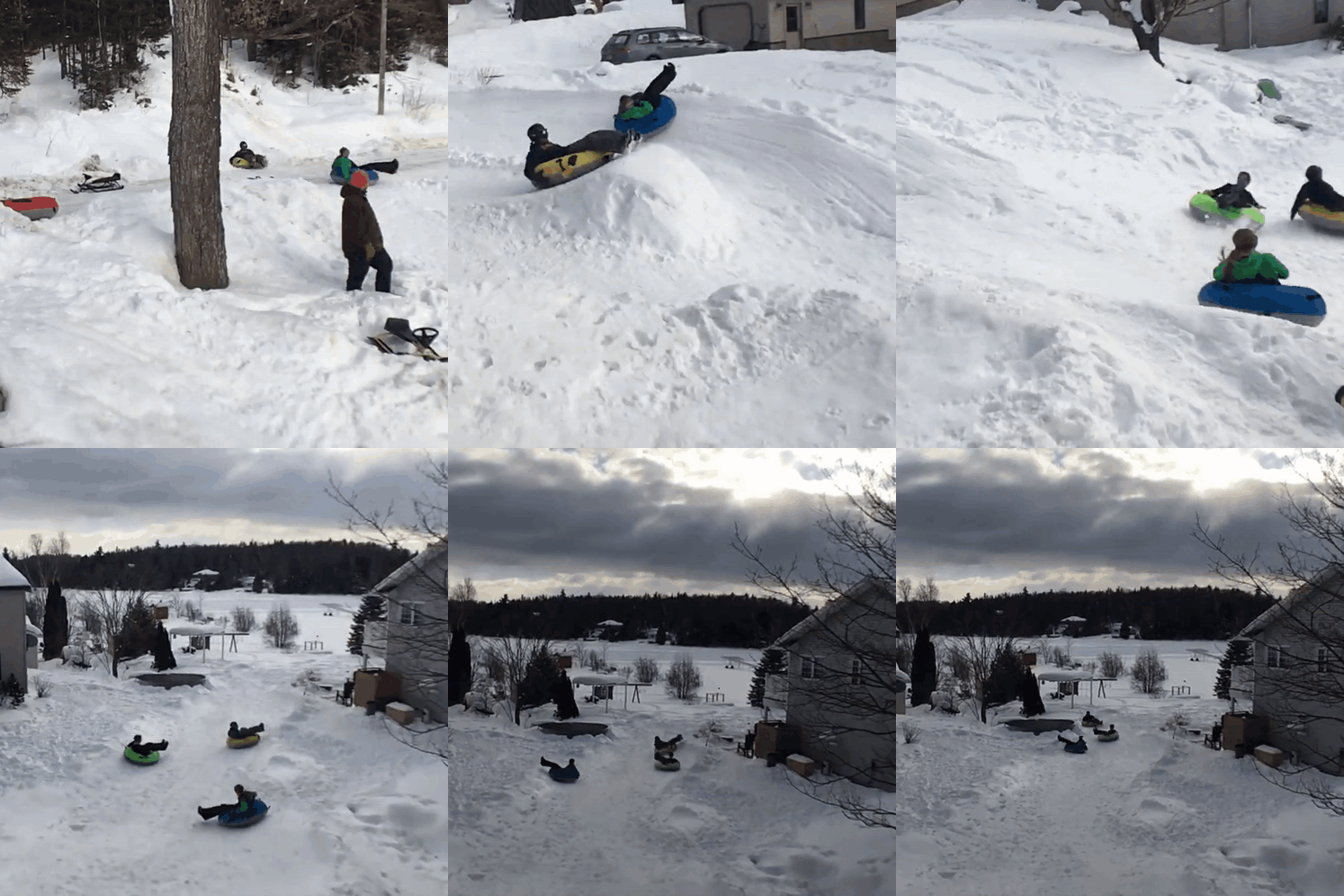
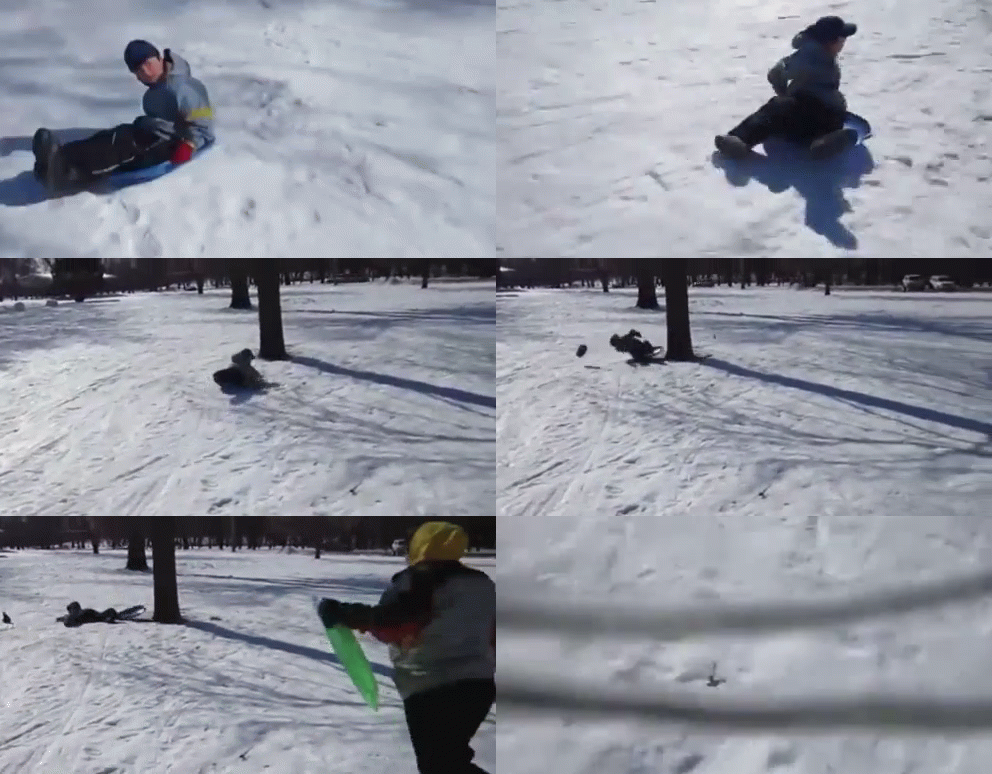
Currently, only one person comes to mind when I think of my favorite people – my best friend, Jenny. Jenny and I have been best friends since I was eight years old. She was a new student at our school, and her arrival coincided with the onset of winter. The big hills at our school were covered in snow, and back then, the teachers let us ride our sleds with reckless abandon.
On the day Jenny arrived, I had been playing “queen of the hill,” pushing other kids around and taking their turns on the hill. I wasn’t being nice that day; on the contrary, I was being an enormous brat. That year, I went through at least three best friends, all before November. I wasn’t a good friend or a nice friend, and I often took full advantage of people. I’d convinced myself of my entitlements, and the other girls who were unlucky enough became my best friends or targets, suffered the consequences. I took things from these girls and wouldn’t return them – things like jewelry, toys, or whatever I wanted. This got me in hot water with the parents, and for the most part, these girls were forbidden to hang out with me. I don’t blame them for that.
I was in an angry period of my childhood, and there was so much going on at home that I took it out on people who might otherwise have liked me. So, on the day I ran into Jenny, literally, I was playing queen of the hill. She had cross-checked me and knocked me on my backside, sending sliding down the hill.
She slid down towards me and caught up at the bottom of the hill. Before I was able to catch my breath and struggle back to my feet, she was overtop of me. She jumped on top of me, straddling my waist, putting her knees on my arms so I couldn’t move them. I was furious. I pushed and struggled, but I couldn’t get her off me. I started to pant and cry, screaming at her to get off me. I became aware that she was the new kid, because I had no idea where this girl came from.
She refused to budge off of me until I apologized for being such a brat and agreed to stop bullying everyone. Right then and there I found myself Struggling with my very identity and her strength. it became clear to me that I had to either give in to her or continue to face the humiliation of this situation. I gave in. I yelled my defeated shame-drenched apology out to anyone who could hear it. I had to say it three times Before she let me up, she told me her name was Jenny and asked mine. Stumbling over my whimper and gasp, I responded, “Tracy. My name is Tracy. I’m sorry. Will you please get off me?”
After she got off me, we hung out and talked for the rest of recess. Until Jenny arrived, I was the toughest girl in class. This all changed that day, and being the toughest girl in class no longer mattered to me. I graciously gave it up to her. I guess there’s some truth to – “if you get too big for your britches, there’s always someone bigger that will knock you down to size.” Jenny wasn’t much bigger than me in size but she was bigger than me in heart.
A beautiful yet sometimes painful connection resulted from this. We started hanging around each other every day and on weekends. I met her family, and she met mine. Her mother worked in Ottawa but lived in the country and was looking for a place for Jenny to live throughout the week. I told her that my mom often took in my cousins and other people’s kids temporarily. It was decided that our parents would meet, which was a success, and Jenny and I were happy to be living together, becoming best friends, and all.
She stayed with us for two years, and we had our ups and downs. We broke our friendship several times during those two years, but it ended up being the best friendship of my lifetime. Each year after, until we were fifteen, we spent our summers together. Jenny moved back to Ottawa for a couple of years, so we had month-long visits and did all kinds of fun stuff. Then she moved back to our village, and we saw each other more often.
We grew apart, my house burned down that year, and I left our village. We lost touch and didn’t reconnect until 2009. It didn’t go well, as we both felt a sense of abandonment from each other, and I, of course, was being a brat to her.
I wasn’t yet ready to have a best friend again; I wasn’t in a good place emotionally. She never gave up on me, though. She would send the odd message and check in with me. Her life was good; she had gotten married and had a beautiful daughter. This pushed me further from her because I was grieving the fact that I couldn’t have children myself and was extremely jealous. I’m glad I got to experience this because it helped me realize how ridiculous jealousy is and I was not only able to get over it, I got over my own self, too.
How I see Jenny 😂🥰
A few years flipped by, and I grew up a lot. I learned how to appreciate Jenny, and I finally answered her messages in 2017. Ever since, we’ve been in regular contact. We visit each other every couple of months and have become a great support for each other.
I’m so grateful for Jenny, and she’s my favorite person because of her lifelong commitment to me and her tough but kind nature. I couldn’t imagine my life without her.
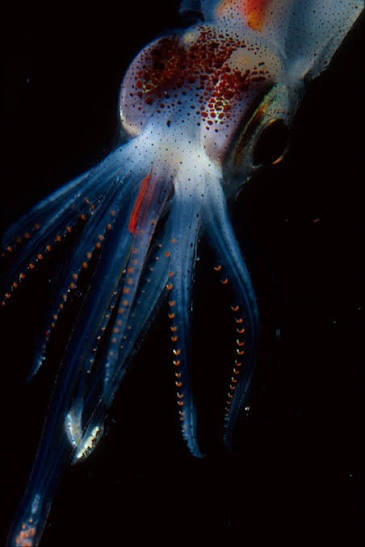
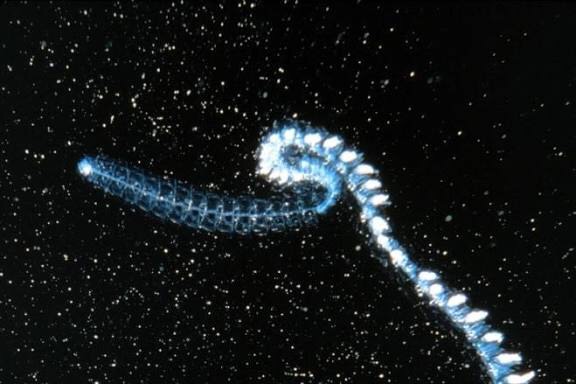
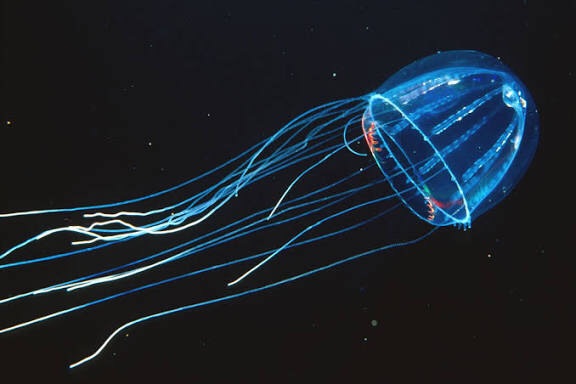
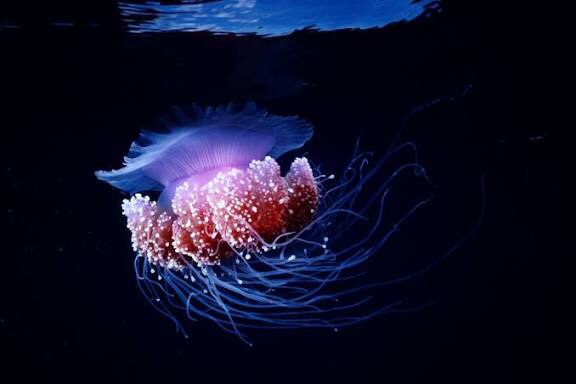
My favorite animals are those that dwell in the depths of the ocean. I’m amazed by their incredible abilities to survive in such extreme conditions.
Complete darkness surrounds these creatures, and the temperature of the water is often just a few degrees above freezing.
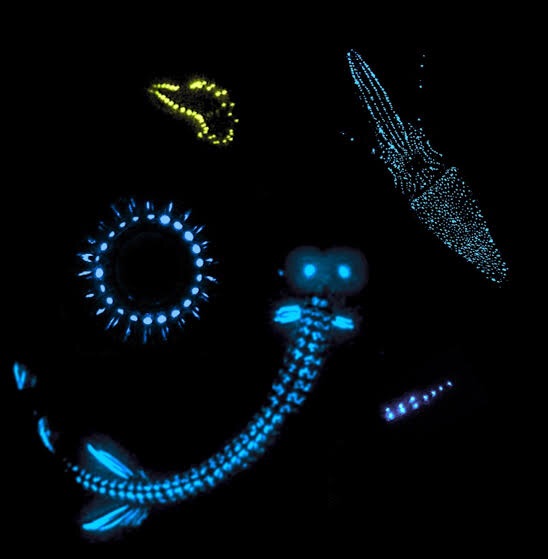
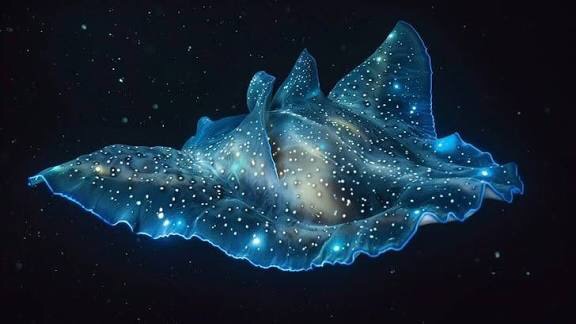
The mystique of their bioluminescence fascinates me to no end. I’ve never been diving, but that doesn’t mean I don’t want to try it someday. I’ve discovered these amazing creatures by watching documentaries such as Blue Planet and television shows like Shark Week, and National Geographic. I can’t forget to include David Attenborough’s nature documentaries.
When I think of being in the depths of the ocean, it sends shivers down my spine. A delicate mix of excitement and fear beckons me to explore the depths.
Some of the creatures that possess bioluminescent properties include:
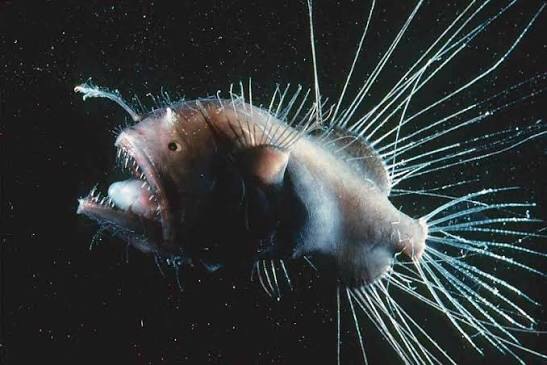
The Anglerfish (Ceratia holboelli): Found in the mesopelagic zone (200-1,000 meters deep), these fish use a bioluminescent lure on their head to attract prey.
The Vampire Squid (Vampyroteuthis infernalis): Living in the oxygen minimum zone (500-1,500 meters deep), this squid uses bioluminescent spots to confuse predators and communicate.
The Lanternfish (Myctophidae): These small fish (found 200-1,000 meters deep) have bioluminescent organs that help them communicate and camouflage.
The Gulper Eel (Eurypharynx pelecanoides): With a massive mouth and bioluminescent organs, this eel (found 500-3,000 meters deep) lures prey into its jaws.
These creatures are just a few examples of the incredible diversity of life in the deep ocean. Their bioluminescence is a testament to the incredible adaptability and resilience of life on Earth.
As I wrap up this post, I’m left wondering what other secrets that the deep ocean holds. The creatures that inhabit this realm are a testament to the incredible diversity and adaptability of life on Earth. Their bioluminescent glow is a reminder of the magic that awaits us in the uncharted depths of our planet.
Maybe someday, I’ll get to experience the thrill of exploring the deep ocean for myself. Until then, I’ll keep exploring through documentaries, books, and the imagination.
The depths of the ocean may be mysterious, but one thing is certain – they’re full of wonder and awe-inspiring beauty.
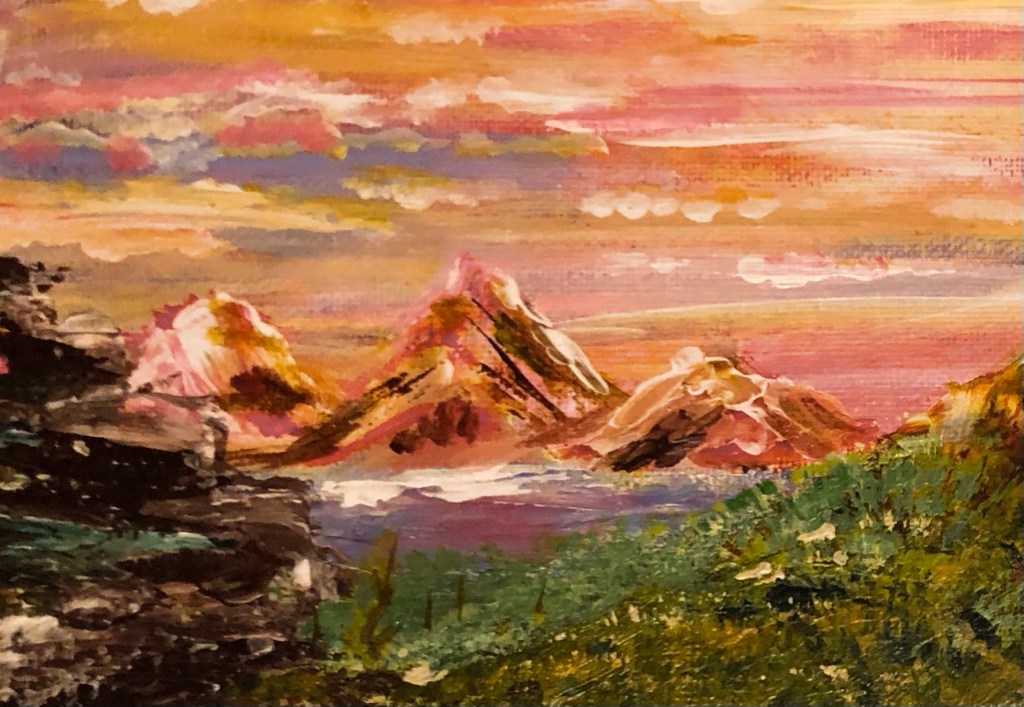
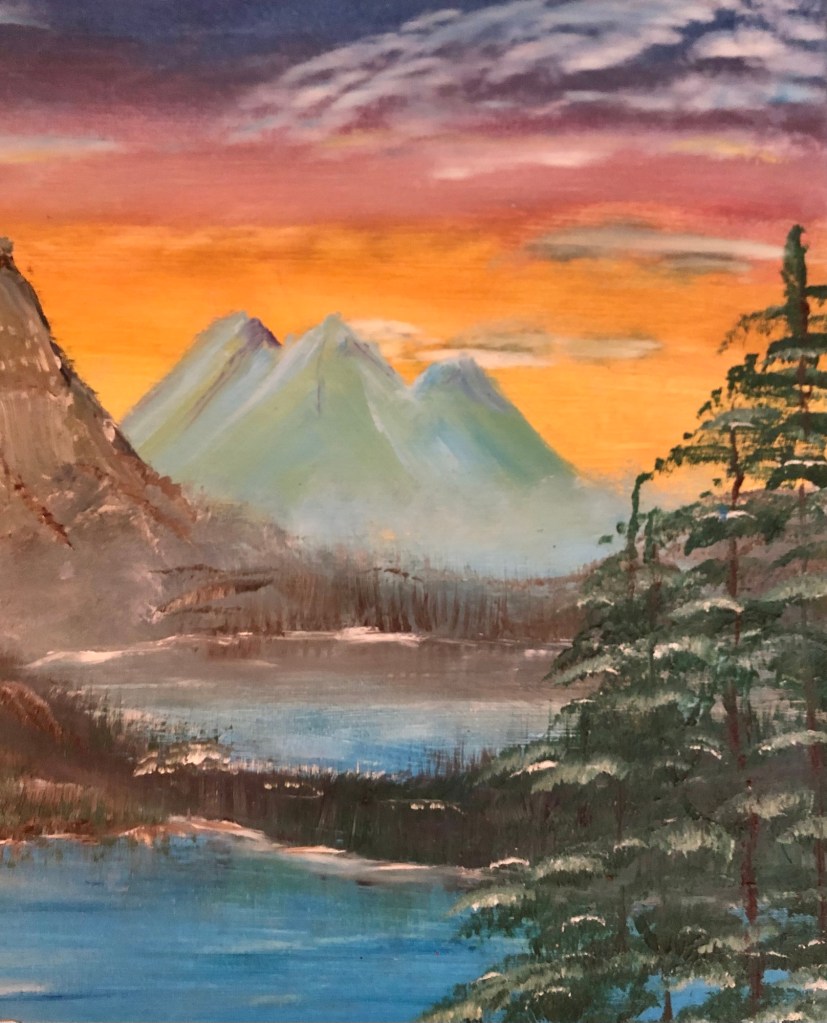
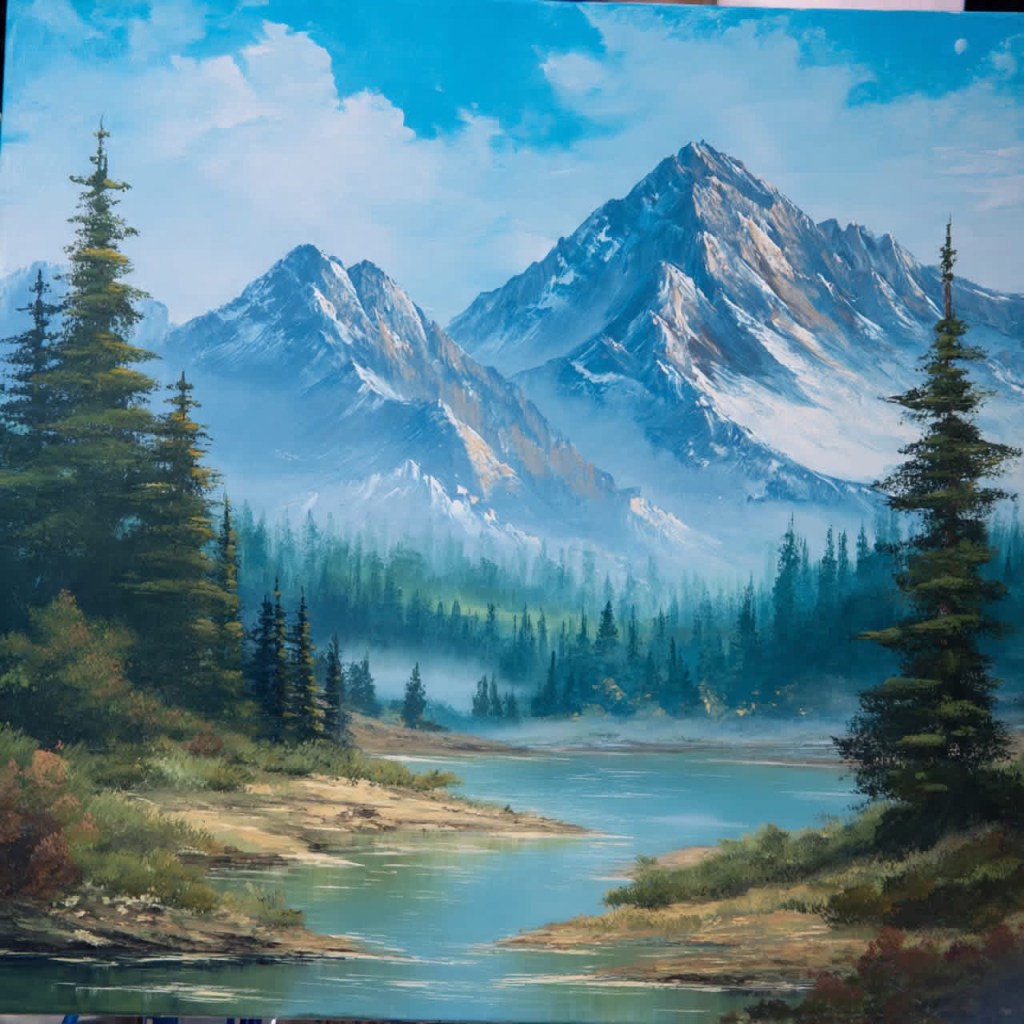
I have always been drawn by the mysterious allure of the mountains. Unlike many people, I’ve never been one to spend copious amounts of time on the beach; the mountains serenade me in a language that’s both primal and soothing.
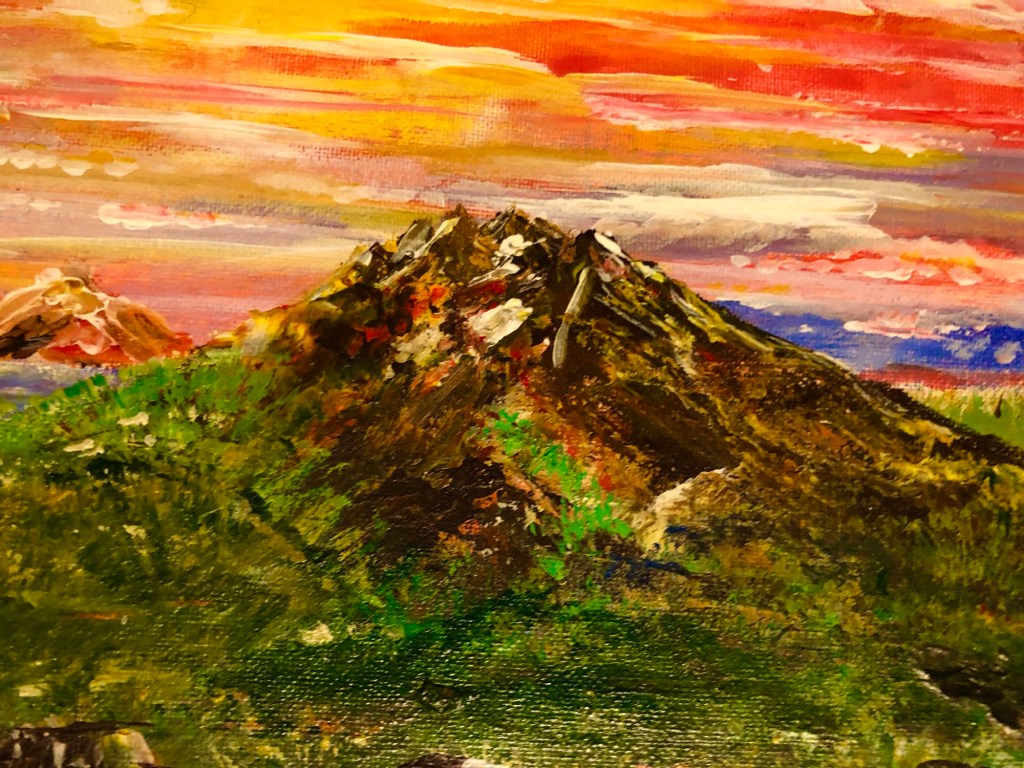
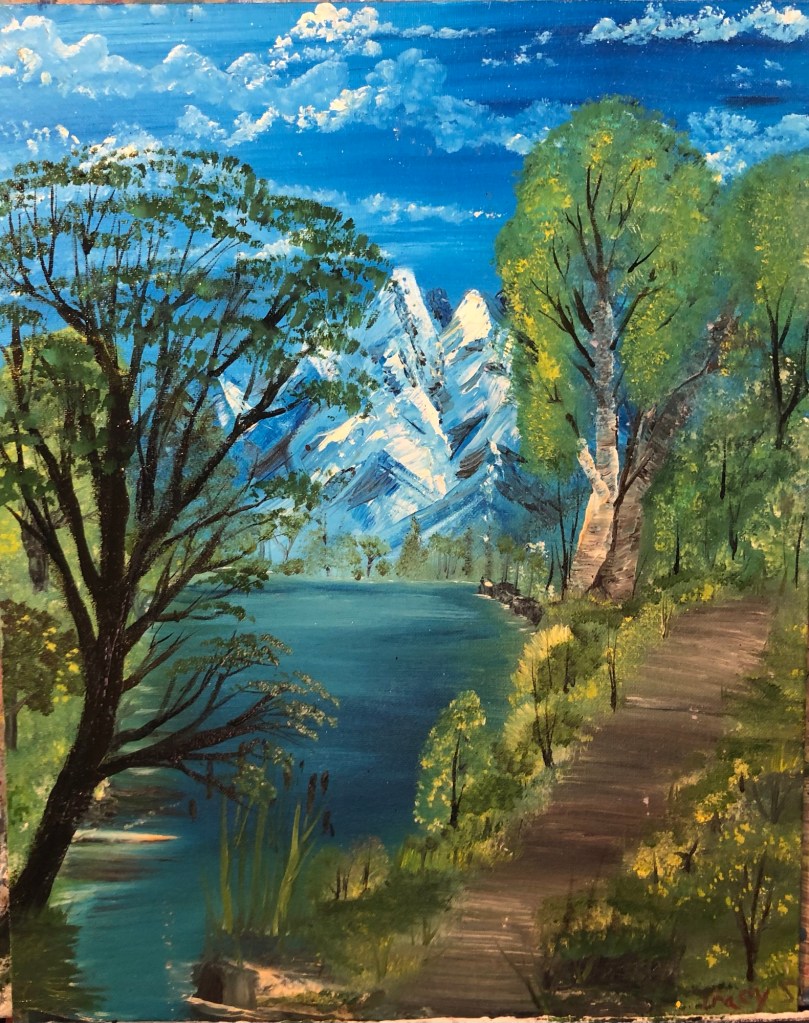
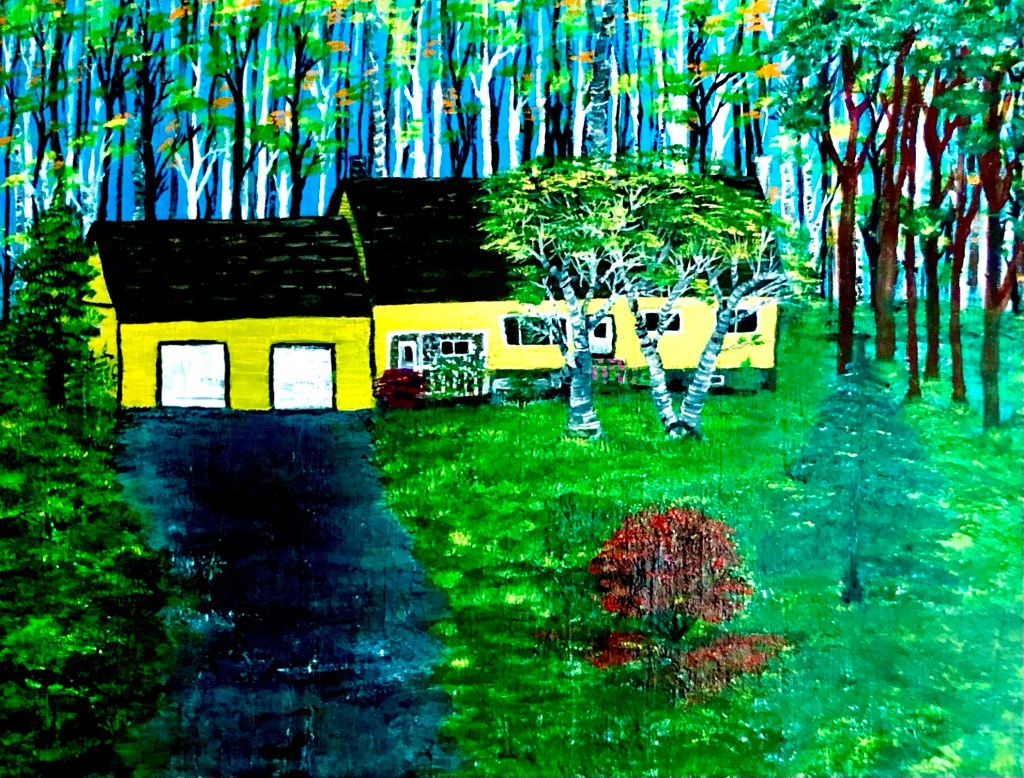
My fascination with mountains began when I first started painting. I was learning how to paint with oil paints using a Bob Ross tutorial. I was able to create my very first mountain scene oil painting. (Picture above)
I felt a warm nudge inside my chest and I knew, I was hooked – the process of bringing a mountain landscape to life on canvas was exhilarating.
I went on to paint several more ‘imaginary’ mountain scenes, but I soon realized they lacked a certain je ne sais quoi. When I tried to sell them at art shows, customers would ask about the location or inspiration, and I’d confess they were born from my imagination – solely created from intellectual inspiration. Sadly, no one seemed to want to pay for a piece of my mind. It was then that I understood – art connoisseurs crave authenticity, a sense of place that only comes from witnessing nature’s beauty firsthand, in a way that can only be understood by the artist and speculated about by the buyers. This is what made buying artworks so much fun.
As I continued to hone my craft, my fascination with the mountains only grew. I began to dream of visiting the Klondike mountains, Kilimanjaro, and Mount Shasta – of walking down dusty trails forged by gold miners, of breathing in the crisp, moist air, and tasting the sweetness of wild freshwater streams.
I long to stand amidst a sea of mountain pines, awestruck by the majesty of nature’s curves and dips, with a blanket of Christmas green stretching as far as the eye can see.
In time, I will trade my easel for a more adventurous companion – a fold-away easel and trusty metal painting case, with which I’ll venture into the mountains, painting en plein air, soaking up the sights, sounds, and scents of these majestic giants.
Until then, I’ll continue to draw inspiration from the images I find online and the stories I hear from others, but I know that nothing will compare to the thrill of painting the mountains, in situ, with all my senses ablowing.
In our house we generally have difficulty agreeing on what to eat for dinner. We often do this old family tradition, that we lovingly picked up from my mother-in-law, called “point”. It’s a process by which the person in charge of preparing the meal opens up the cupboard or freezer and points at the ingredients for our next meal. For the busy days in our household this works great. However, oftentimes, there’s always someone who wants something else. Those times we generally just make whatever we want and break off into our own sections of the kitchen to make it for ourselves.
We have an extremely flexible meal plan in our house.
Although, the top three meals that always brings everyone to the table are breakfast for dinner with all the fixings; toast, eggs, bacon, sliced fruit or cucumber, home-fried potatoes with sweet onion, juice, and jam for the toast. It’s an all-time favourite, especially on particularly busy days.
The second one is Spaghettini with sauce and breaded or grilled chicken. I put sautéd red pepper, baby tomatoes, sweet onion, and garlic in my sauce.
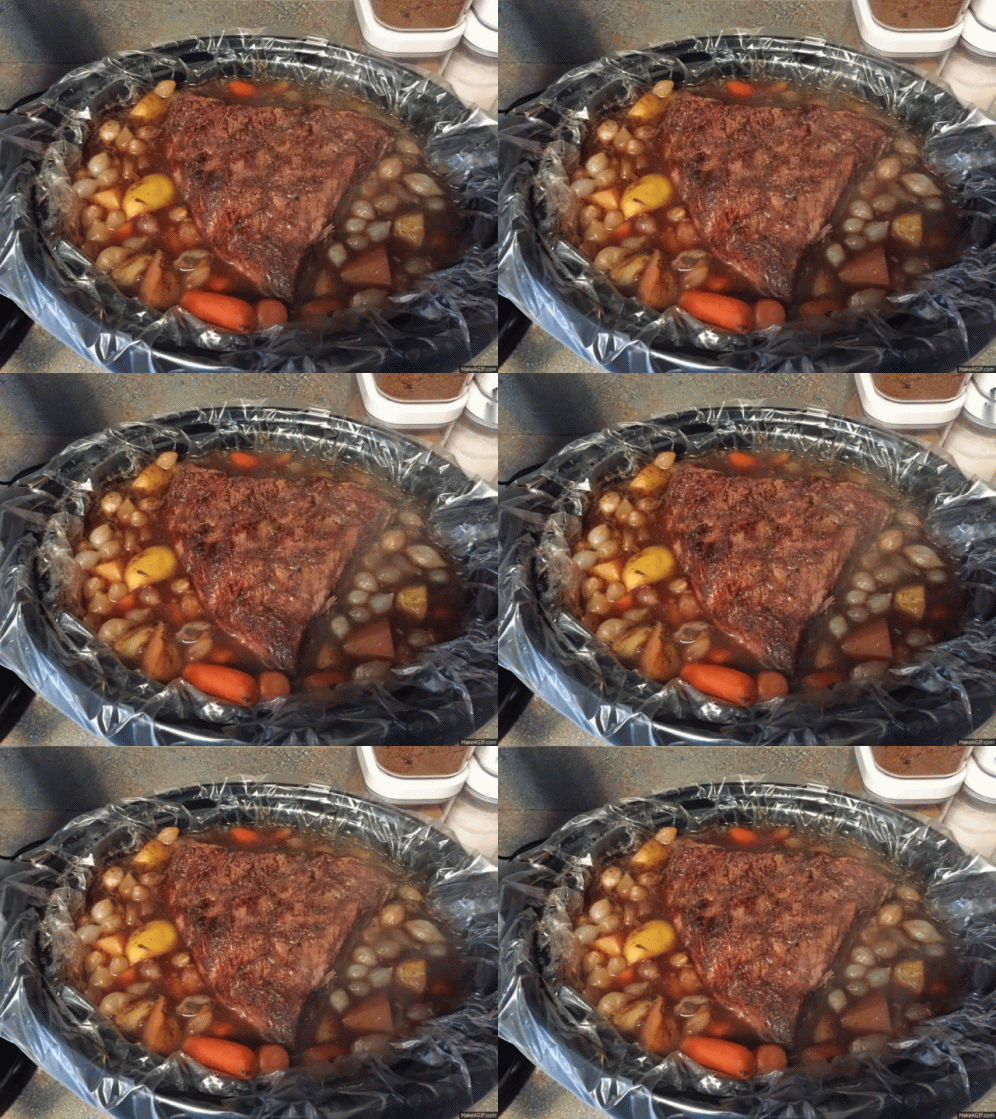
The third meal is Slow Cooked Pot Roast with russet potatoes and carrots. During the day, this meal tickles the tastebuds of everyone in the house because it smells so good. By dinner time, everyone is looking forward to the meal with salivating mouths.
“I don’t want to get to the end of my life and find that I have just lived the length of it. I want to have lived the width of it as well“.
Dianne Ackerman
By Tracy Schruder
I’m absolutely captivated by Dianne Ackerman’s A Natural History of the Senses—it’s a sensory masterpiece that completely transformed my approach to writing. Her exquisite exploration of how we experience the world through sight, sound, touch, taste, and smell is like a key unlocking hidden doors in my mind.
I’d love to meet her, not just to thank her for the gift of her writing, but to explore the world alongside her.
I Imagine wandering through a foggy, frosty morning with Dianne, where the air is so thick with mist it almost feels alive.
The world is hushed, every sound muffled, and the light filters through the fog in shimmering silver threads.
The ground crunches beneath our feet, the cold seeping into our toes as we breathe in the icy air.
The light flickering before my eyes. The trees, skeletal and etched with frost, stretch toward the soft radiance of the rising sun. Every branch, every twig, is tipped with diamonds of ice, shimmering like a thousand tiny prisms.
The sky is a pale, watery blue, and the world feels suspended in this fragile, crystalline moment.
Red, blue, yellow waving along the tree line… The colours are muted now, but as the sun climbs higher, they’ll burst forth like whispers turned to shouts. For now, though, everything is white, frozen in icy, prickly stems formed from the morning fog, thick enough to breathe.
Her book helped me become a better writer by teaching me to slow down, to truly feel the world around me—to notice the way light dances across a leaf, the scent of damp earth after rain, the texture of bark beneath my fingers. It’s a reminder that our senses are portals to memory, to emotion, to the deepest parts of ourselves.
To sit with Dianne Ackerman and talk about these things? About the alchemy of turning experience into art? That would be a gift.






















 tracyschruderblogspot