The Writer in Me

  • Artificial Intelligence 

    Will AI become as essential and relied upon as electricity is today?

    By Tracy Schruder 

    Artificial intelligence (AI) has been rapidly advancing in recent years, transforming numerous aspects of our lives. From virtual assistants like Alexa and Google Home to self-driving cars and personalized medicine, AI is increasingly becoming an integral part of our daily lives. But will AI become as essential and relied upon as electricity is today?

    AI is already being used in various industries, such as- 

    Healthcare, medical professionals are currently using AI-powered diagnostic tools can analyze medical images and identify diseases more accurately than human doctors. AI-assisted robots are also being used in surgeries.

    Transportation, the latest advanced in self-driving cars and trucks are being tested on roads, promising to revolutionize the way we travel.

    Education, AI-powered adaptive learning systems can tailor educational content to individual students’ needs, making learning more effective.

    Customer Service, Chatbots and virtual assistants are being used to provide 24/7 customer support, helping businesses improve customer satisfaction.

    Smart Homes, AI-powered smart home systems can control lighting, temperature, and security, making our living spaces more comfortable and convenient.

    According to my research on Google there are several new emerging AI technologies that are poised to transform various industries, they include 

    Quantum Ai, The integration of quantum computing and AI promises to solve complex problems that are currently unsolvable.

    Edge AI, The deployment of AI at the edge of the network, closer to the source of data, will enable faster and more efficient processing.

    Explainable AI, The development of explainable AI will enable us to understand how AI systems make decisions, increasing transparency and trust.

    Autonomous Systems, Autonomous systems, such as drones and self-driving cars, will become increasingly prevalent, transforming industries like logistics and transportation.

    Will AI Become as Essential as Electricity?

    While AI has made tremendous progress, it’s still unclear whether it will become as essential as electricity. However, considering the rapid advancements and increasing adoption of AI across industries, it’s likely that in the future, AI will become an indispensable part of our lives.

    As AI continues to transform industries and improve our daily lives, we can expect to see increased reliance on AI-powered systems. However, it’s essential to address concerns around AI, such as job displacement, bias, and security, to ensure that AI benefits society as a whole.

    In conclusion, while AI may not be as ubiquitous as electricity just yet, it’s clear that AI is becoming an increasingly essential part of our lives. As AI continues to advance and transform industries, we can expect to see increased reliance on AI-powered systems, ultimately making AI as indispensable as electricity.

  • The Middle Child: A Unique Blend of Roles and Responsibilities. 

    By Tracy Schruder

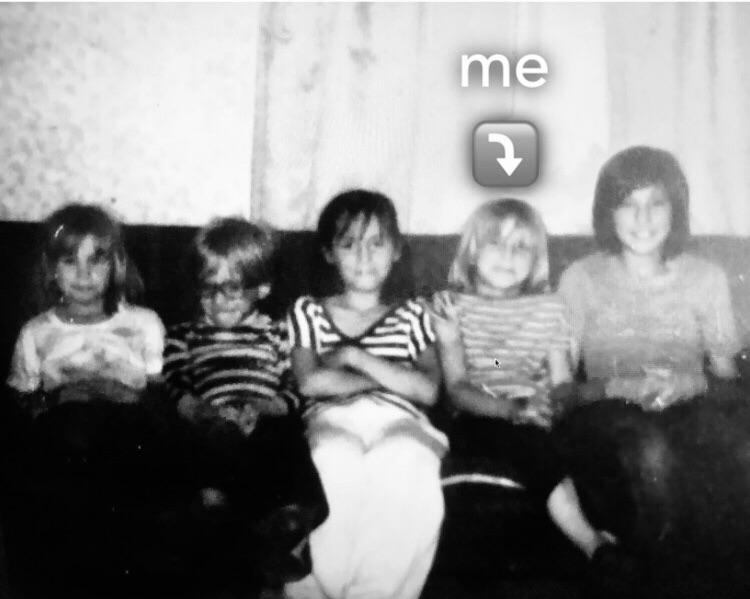
    As a middle child in a blended family, I’ve often found myself navigating a complex web of relationships and roles. But what does it mean to be a middle child, and how does it shape our experiences and perspectives?

    According to statistics, middle children make up approximately 52% of the population (Katrin, 2019). Research suggests that middle children often possess unique traits, such as being more diplomatic, adaptable, and creative (Kluger, 2011).

    In my own family, I’m both the middle child to my mother, who had two daughters from a previous marriage before meeting and marrying my father, and the oldest child to my dad. This unique dynamic has taught me valuable skills, such as adaptability, creativity, and responsibility.

    As the middle child, I’ve often been the risk-taker, the blame-taker, and the sibling collector, responsible for ensuring everyone gets home safely, when the street lights came on. This role has also brought me a sense of pride and responsibility.

    My oldest sister once told me that I was the glue that held our family together. She explained that my birth helped cement her and our other sister’s relationship with my father, making him a true father figure in their lives. Her words meant the world to me and I accepted them as a duty call. 

    This realization has made me appreciate the significance of my position in our family. As the middle child, I’ve learned to navigate complex relationships, negotiate conflicts, and adapt to changing circumstances.

    While being a middle child can present its challenges, it’s also given me a unique perspective on life. I’ve learned to be flexible, to listen, and to mediate. And I’ve come to realize that being the middle child isn’t just about my position in the family – it’s about the skills and traits that have helped me thrive in a complex and ever-changing world.

    *References:*

    Katrin, A. (2019). The Middle Child Syndrome. Verywell Family.

    Kluger, J. (2011). The Power of the Middle Child. Time Magazine.

  • Five Things I do for Fun

    List five things you do for fun.

    Five things I do for fun

    By Tracy Schruder

    I enjoy taking pictures.

    My trusty companion

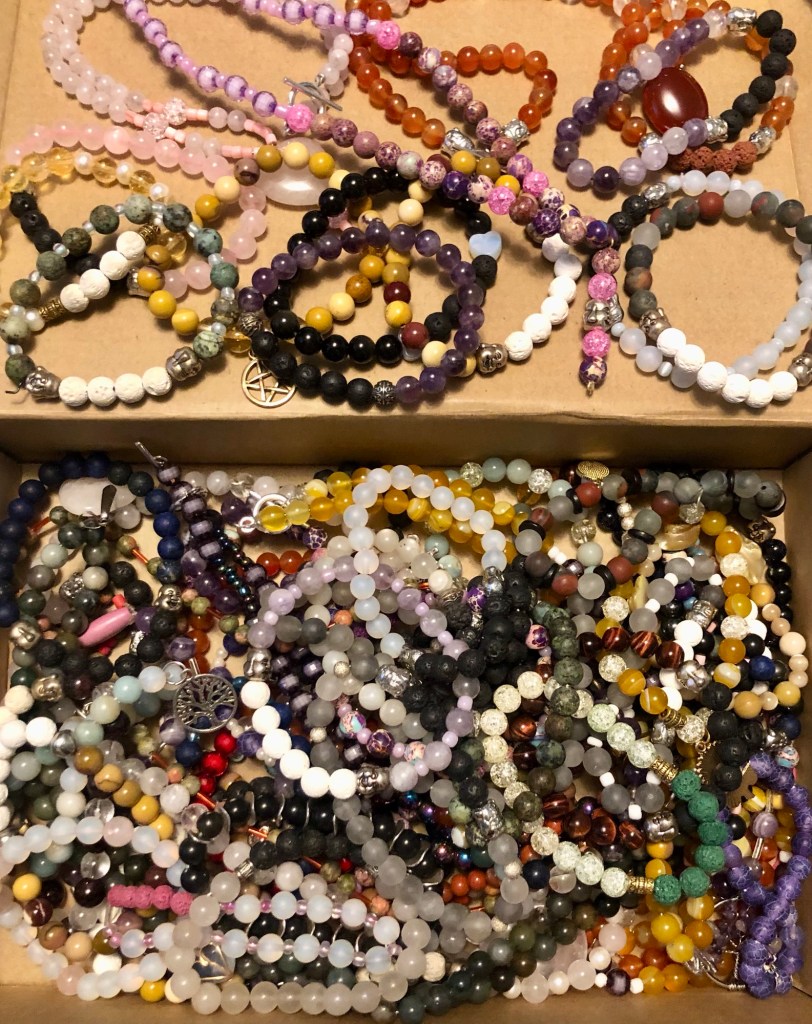
    I enjoy making jewelry

    Semi precious gemstone jewelry

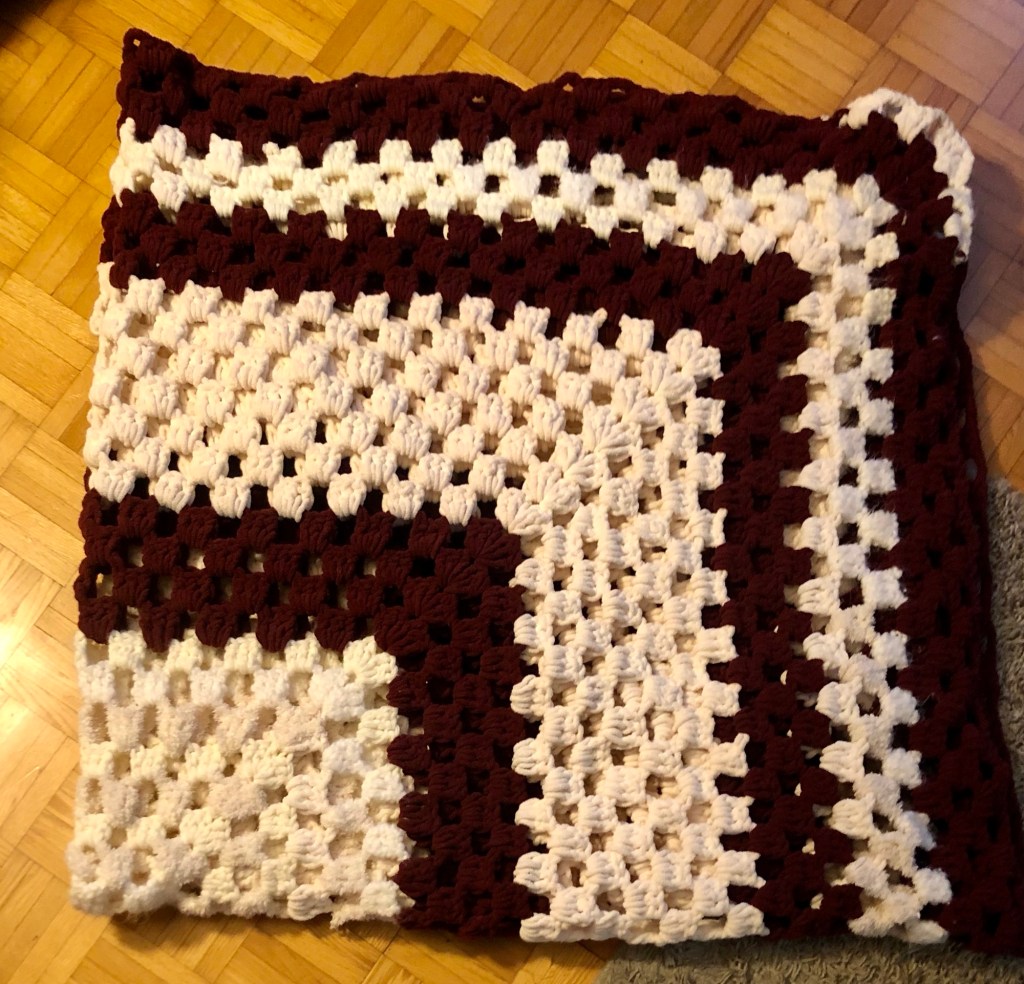
    I enjoy crocheting

    Mixed colour wool blanket

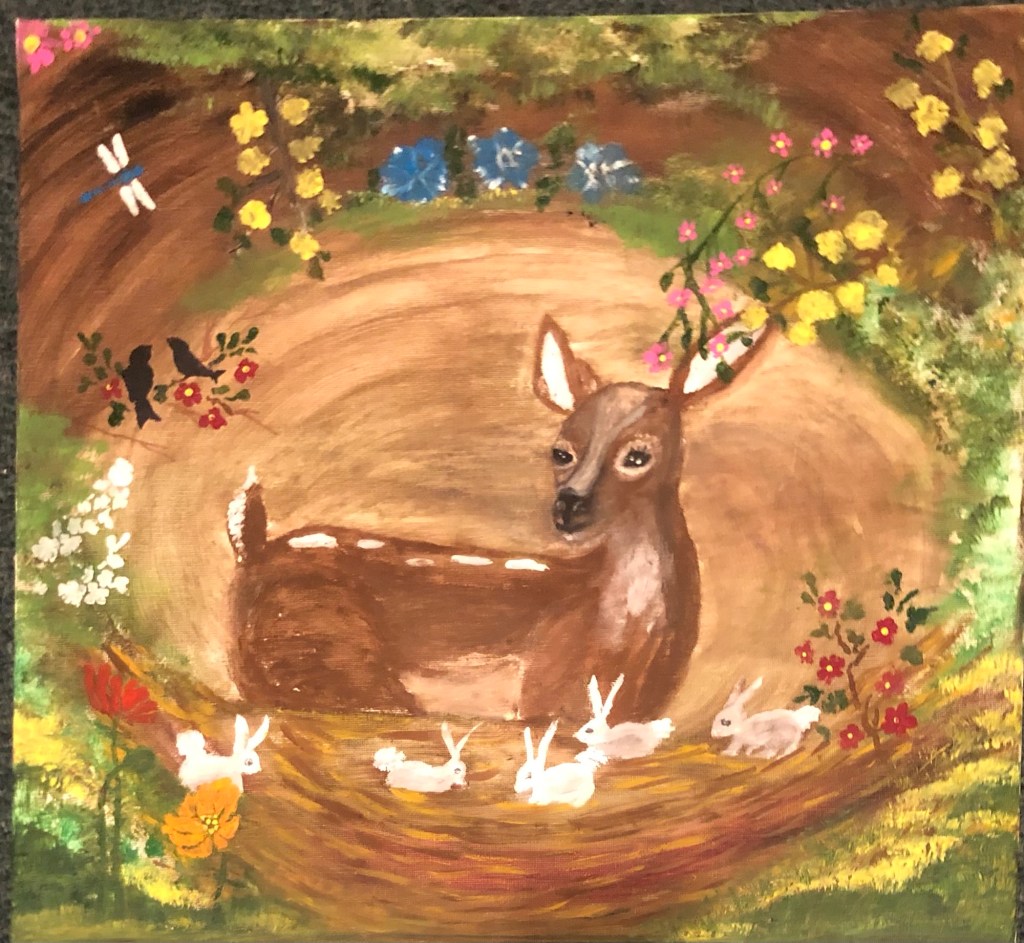
    I enjoy painting

    Oil painting ‘The Den’

    I enjoy journaling

    Various journals
  • Play in the Sunshine

    By Tracy Schruder

    In heaven’s fields of gold, I see you playing ,

    Dancing by the morning light,

    Ushering a brand new day in.

    Your smile shines so bright, your laughter echoes with glee,

    It’s your radiant soul, so wild and carefree.

    I miss you here, dear Mom, with every passing day,

    But I know you’re in a place,where you can love and play. 

    You’ve been given a job in heaven, that’s a most sacred and joyful role,

    Teaching departed souls to play in the sunshine in its warm, golden glow. 

    I see you now, twirling with delight , the smile on your face ensures me that everything will be alright ,

    Two-stepping with the others in sun-kissed fields of light.

    With every step and every twirl, you quiet their fears,

    Letting go of worries and wiping away all their lonely tears , no one is left behind, you seize each heavenly day.

    Although we are apart, I feel your presence near,

    Like gentle ray of sunshine in my heart, a soothing calm, drenched in peaceful cheer.

    I know that day is coming soon, when I’ll join you in the sunshine and dance a jig or two. 

    We’ll dance, and laugh, together, me and you,

    We will watch and wait, for our love ones too.  

    When they arrive we will take them to the sun,

    We’ll dance in the sunshine it’ll be so much fun. 

    Until that day, dear Mom, know you’re always in my heart,

    A shining star that guides me, a love that never departs.

    I’ll hold on to memories of our sunny days on earth,

    And look forward to the time when we’ll play in the sunshine, and give our spirits their worth. 

  • If the universe is expanding?…

    By Tracy Schruder Would it be rational to think that if the universe was once, much smaller, at one time, that the ancient alien theories could be …

    If the universe is expanding?…
  • The meaning of Tracy

    Write about your first name: its meaning, significance, etymology, etc.

    The Meaning of My Name

    By Tracy Schruder

    The meaning of my name :

    Tracy is of French and English origin. It’s derived from the Old French word, traciar, meaning, to trace or to track. In medieval times, the name Tracy referred to a person who was a tracker or a hunter.This word is derived from the Latin tractus,  which means a drawing out or a tracing.

    In modern times, the name Tracy has become unisex, although it was originally more commonly given to males. It’s associated with qualities like; resourcefulness, determination, courage and Loyalty. 

    Some notable people with the name Tracy include Tracy Chapman (American singer-songwriter), Tracy Morgan (American comedian and actor), and Tracy K. Smith (American poet and Pulitzer Prize winner)

    In medieval times, the name Tracy referred to a person who was a tracker, hunter, or pursuer. It’s believed to have originated in Normandy, France, and was brought to England by the Normans after the Norman Conquest in 1066.

    Over time, the name Tracy evolved into various spellings, including Tracey, Traci, Tracie, and others. Today, the name Tracy is found in many countries, including the United States, Canada, Australia, and the United Kingdom.

    Interestingly, the bearers of the name Tracy were pathfinders or trailblazers, figuratively or literally.

    Personally, as far as my father tells me, the choice to use the name Tracy, for his first born child, was well thought out long before I was born. According to him, my paternal great grandmother, who was of British origin, absolutely loved the name Tracey because of a dear male friend named Tracey she had, when she was a child. 

    She would tell him stories of the shenanigans and misadventures that they had growing up. She expressed how much she loved him and dearly, missed him.  

    As my father grew up in close ties with Emma (great grandmother), he was privileged to learn all about her adventurous, strong and brave young friend. 

    She would talk for hours about her young friend. She often shared one special story, that she favoured most, (Dad remembered it by heart) She would reminisce , ‘one day, when she was six years old , they were playing down at the creek, it was winter time and they would slide on the ice in their boots, on this one,  particular day, she had fallen on the ice and bumped her head really bad. She claimed she ‘couldn’t get up and ‘was ‘seeing double’. 

    Her little buddy Tracey who was also six years old, swung into action, he picked her up and carried her all the way up, the long country road, to the homestead farm. According to her it was more than a mile, which is a long walk especially while carrying someone, especially for a six year old.’ 

    It turns out that she had a bad concussion and may have died if Tracey hadn’t got her home and warm as quickly as he did. She thought of Tracey as her little hero. 

    She explained to my father that she always wanted a grandchild named after him because my father’s mom wouldn’t have it. So, ultimately my father promised her, if he ever had kids he would name his firstborn,  Tracy. He shared this story with my mother and she agreed it was a good idea. She would name their first born Tracy because it would be suitable no matter what gender I came out as when I was born. 

  • The Tariff Suggestion 

    The Tariff Suggestion 

    by Tracy Schruder

    Understanding Tariffs: What They Are and How They Impact the Economy

    I never really paid any attention to tariffs in the past. To be honest, I didn’t even know what tariffs were. As I’m a red blooded homegrown Canadian, I watch the news just like everyone else and I’ve noticed that most of the news revolves around politics ever since the Covid lock downs, anyway. So, like every other red blooded Canadian, I’ve taken notice to all of the reports on (presidential candidate) inaugurated President Trump. 

    It’s my opinion that no government can make their country great again by alienating the rest of the continent but that’s just one Canadian’s opinion. I had to figure it all out so I could prepare myself and my family for everything that this entails. So, I’ve done my research and I now, have come to understand that a tariff is a tax imposed by a government on imported goods or services. It is a trade policy tool used to regulate international trade and protect domestic industries. 

    Tariffs can be levied on a wide range of products, including agricultural goods, manufactured goods, and services.I also learned there are several types of tariffs, including:

    Ad valorem tariff 

    A percentage-based tariff that is calculated as a percentage of the imported good’s value.

    Specific tariff 

    A fixed amount of money levied on each unit of the imported good.

    Compound tariff

    A combination of ad valorem and specific tariffs.

    Tariff rate quota (TRQ)

    A tariff that applies a lower tariff rate to a certain quantity of imports, and a higher tariff rate to imports above that quantity.

    I also learned what the purpose of Tariffs are:

    Protecting domestic industries 

    Tariffs can be used to protect domestic industries from foreign competition by making imported goods more expensive.

    Generating revenue

    Tariffs can be used to generate revenue for the government.

    Influencing trade policy

    Tariffs can be used to influence trade policy and negotiate trade agreements.

    I learned about the (potential) positive effects of Tariffs 

    Protection of Domestic Industries

    Tariffs can protect domestic industries from foreign competition, allowing them to grow and develop.

    Job Creation

    By protecting domestic industries, tariffs can help create jobs and stimulate economic growth.

    Revenue Generation

    Tariffs can generate revenue for the government, which can be used to fund public programs and services.

    Negotiating Leverage 

    Tariffs can be used as a bargaining chip in trade negotiations, allowing countries to secure better trade deals.

    Encouraging Domestic Production 

    Tariffs can encourage domestic production by making imported goods more expensive, which can lead to increased domestic investment and innovation.

    Reducing Trade Deficits 

    Tariffs can help reduce trade deficits by reducing the amount of imported goods and increasing the amount of exported goods.

    Protecting National Security 

    Tariffs can be used to protect national security by limiting the importation of goods that could pose a security risk.

    Environmental Protection

    Tariffs can be used to protect the environment by limiting the importation of goods that do not meet environmental standards.

    Promoting Fair Trade

    Tariffs can be used to promote fair trade by penalizing countries that engage in unfair trade practices.

    Stimulating Economic Growth

    Tariffs can stimulate economic growth by increasing domestic investment, innovation, and production.

    It’s worth mentioning that while tariffs can have these positive effects, they can also have negative effects. Listed below are some of the negative effects of Tariffs:

    Increasing prices

    Tariffs can increase the prices of imported goods, which can hurt consumers.

    Reducing trade

    Tariffs can reduce trade between countries, which can hurt businesses that rely on imports and exports.

    Creating trade wars

    Tariffs can create trade wars between countries, which can hurt the global economy.

    Overall, I’ve come to learn that tariffs are a complex trade policy tool that can have both positive and negative effects on the economy.

    I can only imagine how much everything is going to change if the tariffs suggested by President Trump become a reality. Let’s just say that I’m hoping and praying that the Canadian government has what it takes to reach a fair and just, agreement and stop this nonsense about ‘threatening the neighbours with unreasonable and unnecessary tariff price hikes. 

  • Where Love is Concerned, Too Much Is not Even Enough

    By Tracy Schruder 

    As we chase our goal of human happiness, one concept stands tall above the rest: unconditional love. This profound  acceptance of others, without judgment or expectation, is the highest and most intentional goal for achieving true fulfillment. When we embody unconditional love, we create an environment where individuals feel valued, supported, and empowered to be their authentic selves. In this essay, we will explore the transformative power of unconditional love and the importance of remaining present in our interactions with others.

    Unconditional love is not just a feeling, but a conscious choice. It requires us to release our ego’s need to judge, criticize, and control. When we love people unconditionally, we accept them for who they are, without trying to change or manipulate them. This radical acceptance creates a safe space for individuals to express themselves freely, without fear of rejection or condemnation. As a result, they feel seen, heard, and valued, which fosters a deep sense of connection and belonging.

    However, unconditional love is not a one-time achievement, but an ongoing process. It demands that we remain present in our conversations and situations while fully engaging with others. We must pay attention when listening to their needs with both our minds and our hearts. When we are present, we are able to respond with empathy, compassion, and gentle understanding. We are not distracted by our own thoughts, biases, or agendas, but rather focused on the person in front of us. This presence is the key to achieving success in giving genuine support, as it allows us to mould our response to the unique needs of the individual.

    In a world where judgment, criticism, and division are rampant, unconditional love is a revolutionary act. It challenges us to rethink our assumptions, let go of our need for control, and embrace the beauty of diversity. When we choose to love unconditionally, we create a ripple effect of kindness, compassion, and understanding that can transform our lives and our communities.

    In conclusion, where love is concerned, too much isn’t even enough. Is a strong statement that makes us take notice to our scarceness of knowledge on the subject of love. Unconditional love and nonjudgmental acceptance of one another, is the highest and most intentional goal for human happiness. By remaining present in our conversations and diverse situations, we can create a safe space for others to thrive. As we embody unconditional love, we become instruments of transformation, spreading love, kindness, and compassion to all those around us.

    Where love is concerned, too much is not even enough.