The Writer in Me

  • A Inspired Thought About Gratitude for Government

    By Tracy Schruder

    As a proud Canadian, I’m grateful for our country’s functioning government. Since its inception, Canada’s government has been built on the faith of its citizens, who have felt the determination and desire to do good things from those who have run for office. This foundation of trust and dedication has allowed our country to thrive and become the strong, united nation we know today.

    One example of a country that struggles with governance is Venezuela. In recent years, Venezuela has faced significant political and economic challenges, including hyperinflation, food and medicine shortages, corruption, authoritarianism, and human rights abuses. The country’s government has been criticized for its handling of the economy, suppression of opposition voices, and erosion of democratic institutions.

    In contrast, Canada is widely regarded as a stable democracy with a strong, functioning government. Our government is characterized by free and fair elections, an independent judiciary, a robust system of checks and balances, strong protections for human rights and the rule of law, and a diverse and inclusive society.

    Every country has its unique challenges and strengths, but Venezuela’s struggles with governance and stability provide a stark contrast to Canada’s reputation for good governance. This example reminds us of how difficult things could be, and I’m thankful that we’re not on this path.

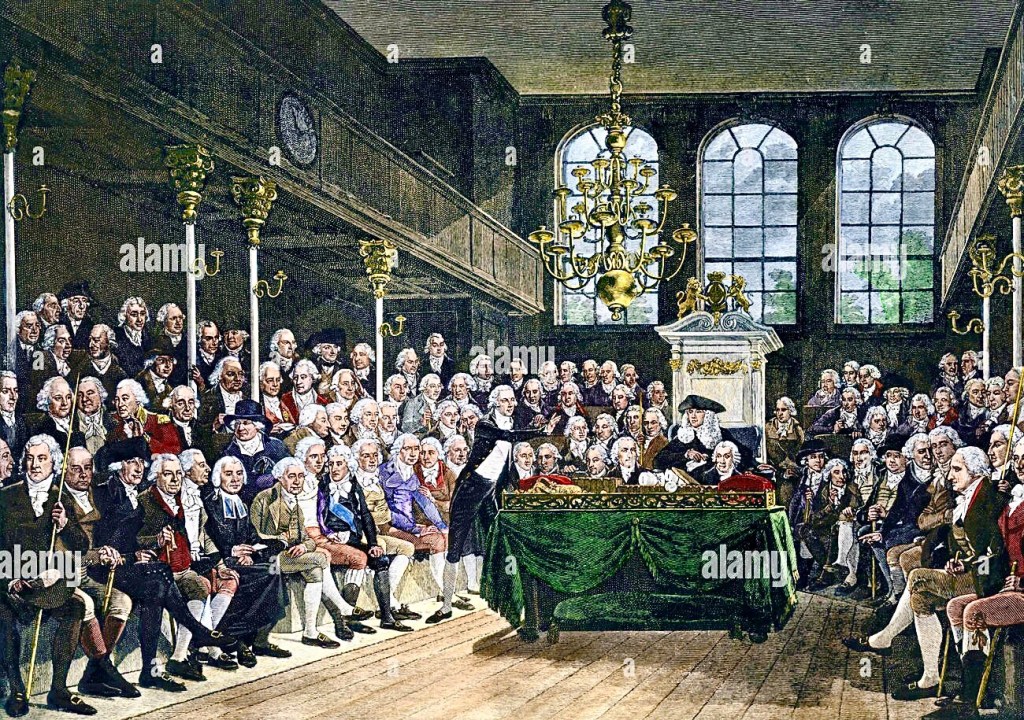
    Our government’s history is a testament to the power of collaboration and the importance of representation. The House of Commons, where politicians from various parties come together to discuss and vote on laws, is a great example of democracy in action. Every politician has a voice and a vote, ensuring that the wellbeing of all Canadian citizens is taken into account.

    Despite our differences, it’s essential to recognize that politicians are human beings doing an extraordinarily difficult job. Each politician deserves our respect, support, and understanding. By looking beyond party lines and getting to know our politicians as individuals, we can drive positive transformation and increased transparency within government institutions.

    As Justin Trudeau once said, “Canadians come from every corner of the world, speak two official languages and hundreds more, practice many faiths, and represent many cultures. Multiculturalism is at the heart of Canada’s heritage and identity – and as Canadians, we recognize that our differences make us strong.”

    Let’s strive to build a better, stronger, and more united Canada, where love and respect for one another are the guiding principles. By working together and supporting our politicians, we can create a brighter future for all Canadians.

  • My Approach to Budgeting

    Write about your approach to budgeting.

    My Approach to Budgeting: A Journey of Growth and Adaptation

    By Tracy Schruder

    Over the years, my approach to budgeting has undergone significant changes. When I first started living on my own, my top priority was paying my rent. I would set aside one-quarter of my rent money each payday, which was every week, thanks to my job at the time. With a steady income and ample overtime opportunities, I had a comfortable financial cushion.

    After covering my rent, I would allocate funds for groceries, buying whatever I needed and wanted without worrying about a strict budget. My cable bill was relatively affordable at $40 per month, which I could easily cover with a single paycheck.

    As I grew older and my career advanced, my financial responsibilities expanded. I took on a mortgage, telephone and satellite bills, car payments and maintenance, insurance premiums, and education expenses. With these added obligations, I had to develop a more sophisticated budgeting strategy to manage my finances effectively.

    Although my financial situation has changed, I still prioritize my housing costs, paying my mortgage weekly, just as I did with my rent in the past. However, I now have to allocate my income among multiple bills each month, taking care to account for fluctuating expenses like hydro and food. To manage these variables, I set aside a specific amount for each expense category, ensuring I have enough funds to cover my needs.

    This adaptive approach to budgeting has helped me navigate the complexities of financial responsibility while maintaining a comfortable standard of living. By prioritizing my expenses, allocating my income wisely, and regularly reviewing my budget, I’ve been able to achieve a sense of financial stability and security.

  • A New Perspective on The Grandfather Paradox 

    By Tracy Schruder

    Essay Collection 

    Time travel, a staple of science fiction, has fascinated humans for centuries. The concept of traversing through time, visiting the past or the future, raises a multitude of questions and paradoxes. One of the most enduring and mind-bending paradoxes is the grandfather paradox. However, I propose a theory that challenges the very existence of this paradox, suggesting that our existence is divinely ordained, and therefore, cannot be altered or prevented.

    The grandfather paradox, first proposed by René Barjavel in 1943, states that if a time traveler were to go back in time and kill their own grandfather before he had children, then the time traveler would never have been born. But if the time traveler was never born, then who killed the grandfather? This paradox highlights the potential inconsistencies and logical problems that arise when dealing with time travel.

    However, I argue that the grandfather paradox is based on a flawed assumption: that our existence is dependent on the physical vessel of our ancestors. In other words, the paradox assumes that our existence is solely the result of a series of physical events, such as our grandparents meeting, falling in love, and having children. But what if our existence is more than just a physical phenomenon? What if our existence is divinely ordained, spiritual, and chosen?

    From this perspective, our existence is not dependent on the physical actions of our ancestors. Instead, our existence is a fundamental aspect of the universe, a unique and special occurrence that cannot be altered or prevented. This means that regardless of what actions our ancestors took, we would still exist. Our existence is not a product of chance or physical circumstance, but rather a deliberate and intentional act of creation.

    This theory cancels out the grandfather paradox, as it renders the physical actions of our ancestors irrelevant to our existence. Even if a time traveler were to go back in time and kill their own grandfather, it would not prevent their own existence. Instead, the time traveler’s existence would continue unabated, as it is a fundamental aspect of the universe.

    This perspective also raises interesting questions about the nature of free will and the concept of destiny. If our existence is divinely ordained, does that mean that our choices and actions are predetermined? Or do we still possess free will, but within the context of a larger, cosmic plan?

    In conclusion, 

    the grandfather paradox, while a fascinating thought experiment, is based on a flawed assumption about the nature of existence. Our existence is not solely dependent on physical events, but rather is a divinely ordained, spiritual, and chosen occurrence. This perspective cancels out the grandfather paradox, and raises intriguing questions about the nature of free will and destiny. Ultimately, our existence is a mysterious and wondrous phenomenon that continues to inspire and awe us.

  • A Patriotic Citizen

    Are you patriotic? What does being patriotic mean to you?

    I am a patriotic Citizen of Canada. For me, being a patriotic citizen means standing by my country, its values, and its institutions, rather than blindly defending a particular government or leader. Political processes have and always be a part of the governance so, I don’t waste too much time on the political candidates nor are any particular politicians a reason for my patriotism. My patriotism involves, upholding the principles enshrined in the Charter of Rights and Freedoms. I actively engaging in critical patriotism to promote positive change. I am always willing to stand up and join in protests pertaining to human rights and dignities. Fair and just laws and ethical standards tethered to the overall well being of our citizens is a very important issue for me. Paying Taxes has never been an issue, I’m grateful to contribute to the upkeep and maintenance of our great country.

    In conclusion,

    as a patriotic citizen of Canada, I believe that my loyalty lies with the country’s values, institutions, and principles, rather than with any particular government or leader. By upholding the Charter of Rights and Freedoms, engaging in critical patriotism, and advocating for human rights and dignities, I strive to contribute to the betterment of our nation. Paying taxes is not just a duty, but a privilege that allows me to support the upkeep and maintenance of our great country. Ultimately, my patriotism is rooted in a deep love and respect for Canada, its people, and its values, and I will continue to stand up for what I believe in, while promoting positive change and a more just society for all.

  • Breaking The Law

    Have you ever unintentionally broken the law?

    Yes, I did unintentionally break the law, once. I misappropriated funds. It happened when I worked at a drive-through coffee shop. It was the year 1994, and I was a young woman trying to earn a decent living to support myself but sometimes my cash ran a bit shy. I had worked for the company for two years at the time, when the incident occurred. I had been offered a position to run a drive-through location, which meant opening up at 4:00 a.m. and working 12-hour shifts until the afternoon staff relieved me.

    Initially, there were three employees, but we eventually split the shifts into eight hours and hired a couple more staff members. As part of my responsibilities, I would prepare the cash float for each shift. One day, while my boss and I were counting the bank deposits, I mentioned that I had to take $10 from my purse to balance the deposit from my shift. She told me that occasional shortages happened and that it wasn’t my responsibility to cover them.

    I then confessed to her that the shortage was due to my borrowing $10 from the cash register the day before for a cab ride home. She looked at me seriously and told me that I wasn’t allowed to do that. I had no idea it was against the rules. I thought that as long as the money was back in the cash register before the next deposit, I believed that it was okay. I was still young and learning.

    My boss explained to me that it was, in fact, against the law and considered to be theft, which could result in up to five years in jail. Although it was an innocent mistake, she wanted to make sure I understood the severity of the situation. I admitted to her that it wasn’t the first time I had done it, I had borrowed money for a cab on three separate occasions but returned the money each, following morning. Fortunately, she let me off with a warning but she scolded me, telling me never to do it again.

    I thanked her and was grateful for her trust in me. I then underwent a couple more weeks of management training, and everything went smoothly from then onwards. I never misappropriated, anything after that. I’m forever grateful to her for her understanding and the second chance that she gave me.

  • Lost In The Dream

    If there were a biography about you, what would the title be?

     A Life of Self-Discovery and Transformation :

    The title “Lost in the Dream” may seem a bit paradoxical, but for me, it accurately describes the essence of my life’s journey.

    As I reflect on my experiences, I feel that this title is fitting and I imagine it to be similar to a lost puzzle piece, once found, can complete the puzzle.

    Growing up, I was a child with a vibrant imagination, I often escaped into fantastical worlds full of utopian societies constructed with 5D ideals, of my own creation.

    While my imagination served me as a source of comfort and inspiration, it also made life somewhat challenging for me. I had difficulty connecting with others and navigating the complex nature, of the real world. I often felt like I was living in a dream, detached from the world around me yet, very much a flesh, blood and bones, part of it. 

    As I entered my teenage years, this illusionary sense of disconnection continued to exist. I struggled to form meaningful relationships, and when I did, I found myself drawn to people, who were unavailable to me and often my love was not returned.  I felt as if I was searching for a sense of validation and love in all the wrong places and this was more truth than fantasy. I felt like was lost in a dream of idealized love and relationships.

    As I joined together the dots in this pattern of behaviour, I allowed it to continue well into my adult life. I struggled more and again I attempted to find my place in the world.

    I most definitely needed to define myself and my purpose. I felt like I was drifting through life on a loosely secured raft , without direction or an anchor to hold me to my path of travel. I often felt trapped in this never-ending dream. I believed that I was unable to wake up to reality. I refused to see the obvious truth.

    However, as I approached my thirtieth birthday, something shifted within me. I had to accept a life without being able to contribute to life, in its most sacred way, there would be no children for me. I had to be honest with myself and face the truth, head on. I had to find another way to make my life matter.

    I began to take responsibility for my actions, my emotions and the space I that inhabited on this planet.

    I began confronting the patterns and behaviors that had held me back, for so long. It was a painful and difficult process, but it marked the beginning of my journey towards self-discovery, self compassion and transformation.

    I ultimately realized that life was short, and that I had a choice to make. I could continue to drift through life, lost in my dreams, or I could take action, pursue my passions, and make a meaningful impact on the world.

    The title “Lost in the Dream” may have once described my life, but it no longer defines me. Instead, it serves as a reminder of the journey I’ve taken, the lessons I’ve learned, and the growth that I had experienced. I am no longer lost; I am found, and I am living my best life with intention, purpose, and passion.

  • How Developing a Conscious Collective Mind Can End War

    War has been a pervasive and devastating aspect of human history, with its roots stretching back to ancient civilizations. From the battles of the Roman Empire to the global conflicts of the 20th century, war has left an indelible mark on humanity. But who is responsible for the perpetuation of war? The answer lies not in a single entity or group, but rather in the collective unconscious of humanity.

    For centuries, humanity has been driven by a dominant masculine energy, characterized by aggression, competition, and domination. This energy has fueled the engines of war, as nations and empires have sought to expand their power and control over others. The feminine energies of nurturing, cooperation, and compassion have been suppressed, leading to a profound imbalance in the human psyche.

    However, I firmly believe that war is not an inevitable aspect of human nature, but rather a manifestation of our collective thoughts and actions. As I see it, war is the unwanted, unloved child of our thought and action manifestation process. It seems that, for now, our reality is being shaped by a greater number of violent thinkers and doers, rather than people like myself who have nothing but great dreams and love for our future – a future that encompasses every living, sentient being on this planet.

    But I remain hopeful. I believe that we have the power to change our reality by shifting our collective consciousness. As more and more individuals awaken to their true nature and the interconnectedness of all life, a new collective consciousness is emerging. This new consciousness is characterized by cooperation, compassion, and mutual understanding.

    The concept of a “New Earth” is not just a figment of imagination or a title of a book by Eckhart Tolle. It is an actual movement and process that has been taking place on the planet. As we continue on this journey of collective transformation, we are witnessing the emergence of a new human experience. It is an experience that is rooted in love, compassion, and unity, rather than fear, separation, and conflict.

    I have faith that we are creating a new earth, a new experience, and that we are at the beginning of a beautiful human transition. This transition is not just about ending war, but about creating a world that is just, equitable, and peaceful. It is a world where every human being has the opportunity to thrive and reach their full potential.

    As we move forward on this journey, it is essential that we continue to cultivate a conscious collective mind. This means recognizing the interconnectedness of all life and the inherent value and worth of every human being. It means seeking to resolve conflicts through dialogue and diplomacy, rather than violence and aggression. And it means working together to create a world that is just, equitable, and peaceful for all.

    In conclusion, developing a conscious collective mind is the key to ending war and creating a new human experience. As we continue on this journey of collective transformation, I have faith that we will create a world that is rooted in love, compassion, and unity, rather than fear, separation, and conflict. We can shape our reality with our thoughts and actions, and I choose to dream of a future filled with love, peace, and harmony for all.

  • Government and Political Systems 

    By Tracy Schruder

    Google image

    This complex and fascinating topic has interested me ever since grade nine history class. We were assigned the project to 

    The concept of government and political systems has evolved over thousands of years, with various forms of organization and leadership emerging in different parts of the world.

    The earliest forms of government were likely tribal councils and monarchies, with evidence of such systems dating back to ancient civilizations in Mesopotamia, Egypt, and China. These early governments were often formed to provide stability, security, and organization for growing populations.

    As societies grew and became more complex, so did the systems of government. The ancient Greeks, for example, developed the concept of democracy, where power was held by the people through elected representatives. The Romans, on the other hand, developed a system of governance based on laws and institutions.

    So, who invented government and political systems? It’s difficult to pinpoint a single inventor, as these systems have evolved over time through the contributions of many individuals and societies.

    What are the possible reasons why politicians create problems? They are often a result of competing interests, power struggles, and the complexities of governance. Politicians are human beings, after all, with their own biases, agendas, and limitations.

    Parliament Building Ottawa, Ontario Canada 🇨🇦

    As for the democratic voting system, it exists is because it’s a fundamental right of the citizens and allows them to participate in the democratic process. Voting can bring about change and hold elected officials accountabile. However, it’s also important to recognize that voting is just one aspect of a functioning democracy, and that critical thinking, activism, and community engagement are also essential for creating positive change.

    Is it possible to remove governmental influence from the world? When it comes removing governmental influence from the world, it’s a complex and idealistic notion. While some argue that governments can be oppressive and limiting, others recognize the importance of governance in maintaining social order, providing public goods and services, and protecting individual rights.

    Could humanity become conscious enough to move past old systems and practices? It’s possible, but it would require a fundamental shift in human consciousness and a willingness to adopt new, more equitable, and sustainable systems of governance. This might involve embracing principles of decentralization, participatory democracy, and global citizenship.

    Ultimately, creating a more just and equitable world will require a collective effort to reimagine and transform our systems of governance, economy, and society.

    In conclusion, 

    the concept of government and political systems has undergone significant transformations throughout history, shaped by the contributions of numerous individuals and societies. While these systems have provided stability, security, and organization, they are not without their flaws. The complexities of governance, competing interests, and human biases can lead to problems and inefficiencies.

    However, by recognizing the importance of democratic participation, critical thinking, and community engagement, we can work towards creating more just and equitable systems. As we move forward, it is essential to consider the potential for new, more sustainable, and decentralized forms of governance that prioritize global citizenship and the well-being of all individuals.

    Ultimately, the future of governance will depend on our collective ability to reimagine and transform our systems, embracing a more conscious and equitable approach to decision-making. By doing so, we can create a brighter future for generations to come.

  • Living The Dream

    What were your parents doing at your age?

    Mom and dad 53-54 years old

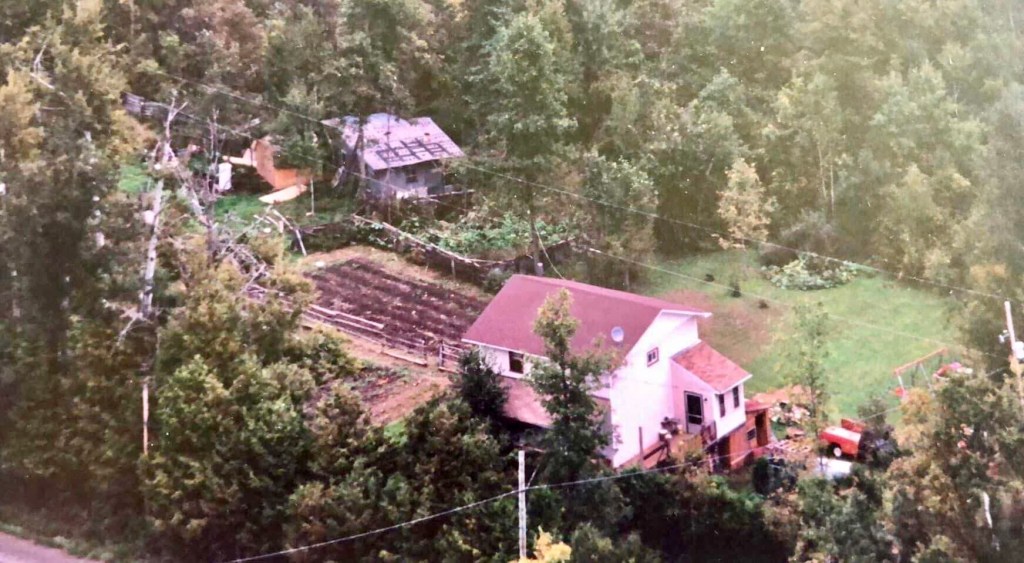
    When my parents were my age (53), they were living the dream. They had a full life with all the trimmings: children, grandchildren, a home of their own, as well as being gainful employment. They were both still working at their respective jobs – Mom as a secretary at the local automobile salvage shop, and Dad as a mechanic. At that time, they were raising my nephew, Christopher. They lived in a lovely three-bedroom home on a country road, which our family helped build together.

    The homestead

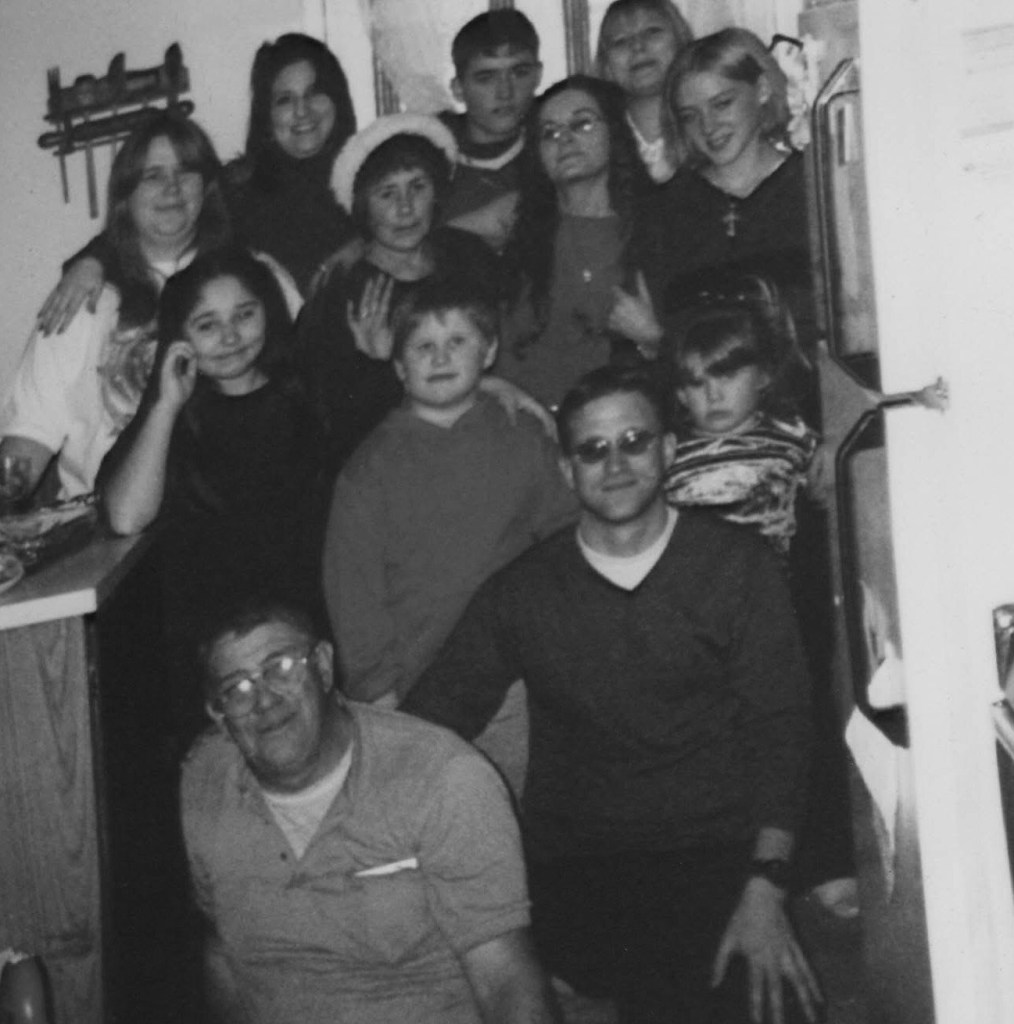
    As parents of five adult children, they were blessed with five grandchildren: Rita, Robert, Jena, Christopher, and little Tracy (my niece, who was named after me).

    Family picture

    They lived the dream, and they did it well. My parents were popular and respected individuals who always strove to do what was right. They made a conscious effort to be fair and honest in all their dealings. By doing so, they inspired and encouraged each and every one of us in the family to strive for excellence. They were hardworking and caring people who left a lasting impact on our lives.

    Sadly, Mom and my nephew Robert have since passed away. Dad is now living life to the best of his ability without her. We, too, are learning to navigate life without her. I really enjoyed writing this post, as it gave me the opportunity to reminisce through old family photos and relive cherished memories.

    Although I miss my mom every single minute of every day, I take comfort in knowing that she continues to watch over us, no matter what challenges we may face.

  • The Law of Motion

    If you had the power to change one law, what would it be and why?

    If I had the power to change one law I would choose to change the law of motion. I chose this law because I believe that …understanding and applying the principles of Newton’s Laws of Motion can have a profound impact on our daily lives, from the way we design and interact with technology to the way we approach problems and make decisions, and by exploring these laws, we can gain a deeper appreciation for the intricate and harmonious workings of the universe.

    The Laws of Motion were created by Sir Isaac Newton. Newton formulated his Laws of Motion in the late 17th century. Sir Isaac Newton (1643-1727) was a renowned English mathematician, physicist, astronomer, and scientist who laid the foundation for the Scientific Revolution of the 17th century. He is widely recognized as one of the most influential scientists in history. He formulated several hypothesis on the laws that govern life. 

    Newton formulated three laws that describe how objects move and respond to forces.

     There are fundamental principles in physics that describe the relationship between a body and the forces acting upon it. Let’s explore these laws and then dive into a hypothetical scenario where modifying or manipulating these laws could potentially repair spinal cord injuries.

    The Three Laws of Motion

    1. First Law – Law of Inertia 

    An object at rest will remain at rest, and an object in motion will continue to move with a constant velocity, unless acted upon by an external force.

    2. Second Law – Law of Acceleration

    The force applied to an object is equal to the mass of the object multiplied by its acceleration. F = ma

    3. Third Law – Law of Action and Reaction

    For every action, there is an equal and opposite reaction.

    Hypothetical Scenario: 

    Manipulating the Laws of Motion to Repair Spinal Cord Injuries:

    Imagine a world where scientists discover a way to manipulate the Laws of Motion to create a device that can repair spinal cord injuries. This device, called the NeuroMotion Regenerator

    (NMR), uses advanced technology to create a localized distortion of the space-time continuum, allowing for the manipulation of forces and motion at the molecular level.

    The NMR device is placed near the damaged spinal cord area and emits a unique energy signature that disrupts the normal Laws of Motion. This disruption creates a micro-environment where the forces acting on the damaged cells and tissues are altered, allowing for the regeneration of new neural connections and the repair of damaged tissue.

    The NMR device uses advanced algorithms and AI to precision-target the damaged areas, ensuring that the manipulated forces and motion are applied in a controlled and safe manner. The device also includes real-time monitoring and feedback systems to adjust the treatment parameters as needed.

    The Latest Research and Development

    While the concept of manipulating the Laws of Motion to repair spinal cord injuries is still purely hypothetical, there are ongoing research and development efforts focused on using advanced technologies to treat spinal cord injuries. Some examples include:

    Stem Cell Therapies,

    Researchers are exploring the use of stem cells to repair damaged spinal cord tissue. Stem cells have the ability to differentiate into various cell types, including neural cells.

    Neuroprosthetics,

    Scientists are developing neuroprosthetic devices that can bypass damaged spinal cord areas, allowing for the restoration of motor function and sensation.

    Gene Therapies,

    Researchers are investigating the use of gene therapies to promote the regeneration of new neural connections and the repair of damaged tissue.

    Optogenetics,

    Scientists are exploring the use of optogenetics, which involves the use of light to control specific cells or neural pathways, to restore motor function and sensation in individuals with spinal cord injuries.

    While these technologies hold promise, they are still in the early stages of development, and significant research is needed to bring them to clinical trials and eventual widespread use.

    In conclusion,

    while manipulating the Laws of Motion to repair spinal cord injuries is currently purely hypothetical, ongoing research and development efforts are focused on using advanced technologies to treat spinal cord injuries. These efforts hold promise for improving the lives of individuals with debilitating spinal cord injuries.