Category: Politics

  • Government and Political Systems 

    By Tracy Schruder

    Google image

    This complex and fascinating topic has interested me ever since grade nine history class. We were assigned the project to 

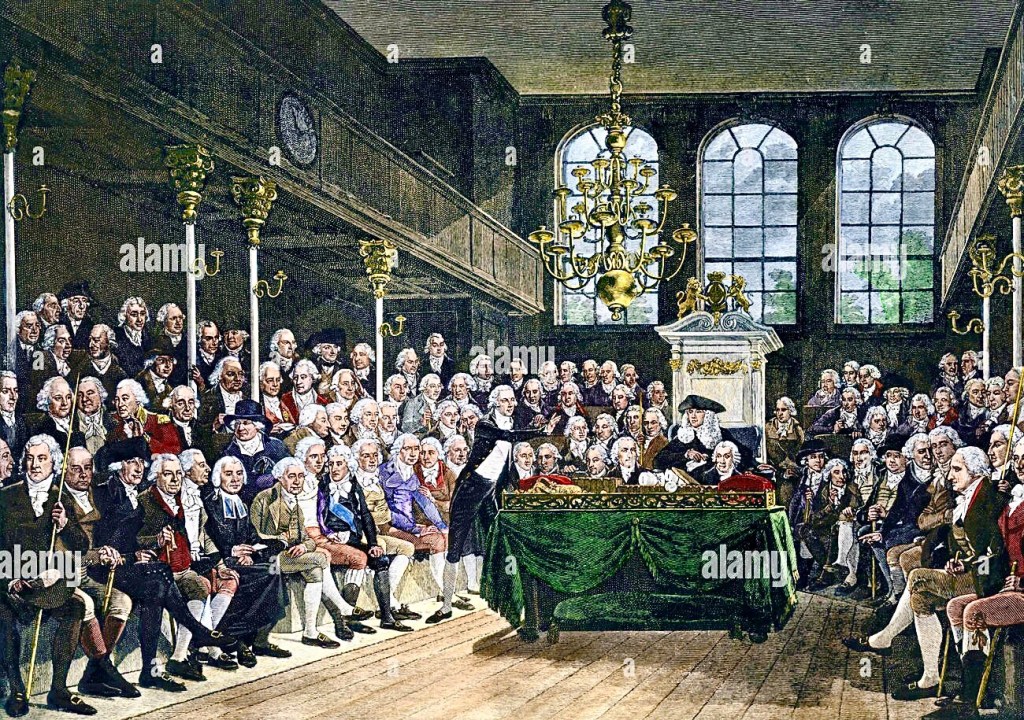
    The concept of government and political systems has evolved over thousands of years, with various forms of organization and leadership emerging in different parts of the world.

    The earliest forms of government were likely tribal councils and monarchies, with evidence of such systems dating back to ancient civilizations in Mesopotamia, Egypt, and China. These early governments were often formed to provide stability, security, and organization for growing populations.

    As societies grew and became more complex, so did the systems of government. The ancient Greeks, for example, developed the concept of democracy, where power was held by the people through elected representatives. The Romans, on the other hand, developed a system of governance based on laws and institutions.

    So, who invented government and political systems? It’s difficult to pinpoint a single inventor, as these systems have evolved over time through the contributions of many individuals and societies.

    What are the possible reasons why politicians create problems? They are often a result of competing interests, power struggles, and the complexities of governance. Politicians are human beings, after all, with their own biases, agendas, and limitations.

    Parliament Building Ottawa, Ontario Canada 🇨🇦

    As for the democratic voting system, it exists is because it’s a fundamental right of the citizens and allows them to participate in the democratic process. Voting can bring about change and hold elected officials accountabile. However, it’s also important to recognize that voting is just one aspect of a functioning democracy, and that critical thinking, activism, and community engagement are also essential for creating positive change.

    Is it possible to remove governmental influence from the world? When it comes removing governmental influence from the world, it’s a complex and idealistic notion. While some argue that governments can be oppressive and limiting, others recognize the importance of governance in maintaining social order, providing public goods and services, and protecting individual rights.

    Could humanity become conscious enough to move past old systems and practices? It’s possible, but it would require a fundamental shift in human consciousness and a willingness to adopt new, more equitable, and sustainable systems of governance. This might involve embracing principles of decentralization, participatory democracy, and global citizenship.

    Ultimately, creating a more just and equitable world will require a collective effort to reimagine and transform our systems of governance, economy, and society.

    In conclusion, 

    the concept of government and political systems has undergone significant transformations throughout history, shaped by the contributions of numerous individuals and societies. While these systems have provided stability, security, and organization, they are not without their flaws. The complexities of governance, competing interests, and human biases can lead to problems and inefficiencies.

    However, by recognizing the importance of democratic participation, critical thinking, and community engagement, we can work towards creating more just and equitable systems. As we move forward, it is essential to consider the potential for new, more sustainable, and decentralized forms of governance that prioritize global citizenship and the well-being of all individuals.

    Ultimately, the future of governance will depend on our collective ability to reimagine and transform our systems, embracing a more conscious and equitable approach to decision-making. By doing so, we can create a brighter future for generations to come.

  • The Tariff Suggestion 

    The Tariff Suggestion 

    by Tracy Schruder

    Understanding Tariffs: What They Are and How They Impact the Economy

    I never really paid any attention to tariffs in the past. To be honest, I didn’t even know what tariffs were. As I’m a red blooded homegrown Canadian, I watch the news just like everyone else and I’ve noticed that most of the news revolves around politics ever since the Covid lock downs, anyway. So, like every other red blooded Canadian, I’ve taken notice to all of the reports on (presidential candidate) inaugurated President Trump. 

    It’s my opinion that no government can make their country great again by alienating the rest of the continent but that’s just one Canadian’s opinion. I had to figure it all out so I could prepare myself and my family for everything that this entails. So, I’ve done my research and I now, have come to understand that a tariff is a tax imposed by a government on imported goods or services. It is a trade policy tool used to regulate international trade and protect domestic industries. 

    Tariffs can be levied on a wide range of products, including agricultural goods, manufactured goods, and services.I also learned there are several types of tariffs, including:

    Ad valorem tariff 

    A percentage-based tariff that is calculated as a percentage of the imported good’s value.

    Specific tariff 

    A fixed amount of money levied on each unit of the imported good.

    Compound tariff

    A combination of ad valorem and specific tariffs.

    Tariff rate quota (TRQ)

    A tariff that applies a lower tariff rate to a certain quantity of imports, and a higher tariff rate to imports above that quantity.

    I also learned what the purpose of Tariffs are:

    Protecting domestic industries 

    Tariffs can be used to protect domestic industries from foreign competition by making imported goods more expensive.

    Generating revenue

    Tariffs can be used to generate revenue for the government.

    Influencing trade policy

    Tariffs can be used to influence trade policy and negotiate trade agreements.

    I learned about the (potential) positive effects of Tariffs 

    Protection of Domestic Industries

    Tariffs can protect domestic industries from foreign competition, allowing them to grow and develop.

    Job Creation

    By protecting domestic industries, tariffs can help create jobs and stimulate economic growth.

    Revenue Generation

    Tariffs can generate revenue for the government, which can be used to fund public programs and services.

    Negotiating Leverage 

    Tariffs can be used as a bargaining chip in trade negotiations, allowing countries to secure better trade deals.

    Encouraging Domestic Production 

    Tariffs can encourage domestic production by making imported goods more expensive, which can lead to increased domestic investment and innovation.

    Reducing Trade Deficits 

    Tariffs can help reduce trade deficits by reducing the amount of imported goods and increasing the amount of exported goods.

    Protecting National Security 

    Tariffs can be used to protect national security by limiting the importation of goods that could pose a security risk.

    Environmental Protection

    Tariffs can be used to protect the environment by limiting the importation of goods that do not meet environmental standards.

    Promoting Fair Trade

    Tariffs can be used to promote fair trade by penalizing countries that engage in unfair trade practices.

    Stimulating Economic Growth

    Tariffs can stimulate economic growth by increasing domestic investment, innovation, and production.

    It’s worth mentioning that while tariffs can have these positive effects, they can also have negative effects. Listed below are some of the negative effects of Tariffs:

    Increasing prices

    Tariffs can increase the prices of imported goods, which can hurt consumers.

    Reducing trade

    Tariffs can reduce trade between countries, which can hurt businesses that rely on imports and exports.

    Creating trade wars

    Tariffs can create trade wars between countries, which can hurt the global economy.

    Overall, I’ve come to learn that tariffs are a complex trade policy tool that can have both positive and negative effects on the economy.

    I can only imagine how much everything is going to change if the tariffs suggested by President Trump become a reality. Let’s just say that I’m hoping and praying that the Canadian government has what it takes to reach a fair and just, agreement and stop this nonsense about ‘threatening the neighbours with unreasonable and unnecessary tariff price hikes.