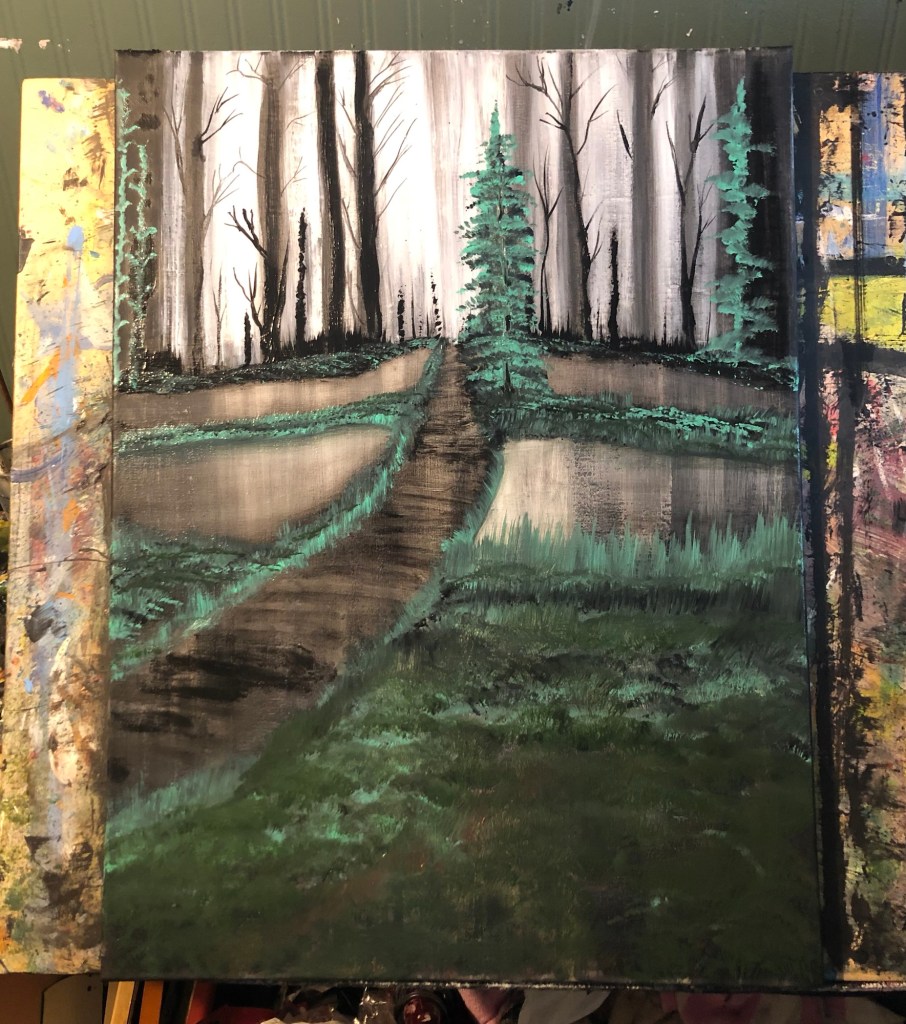
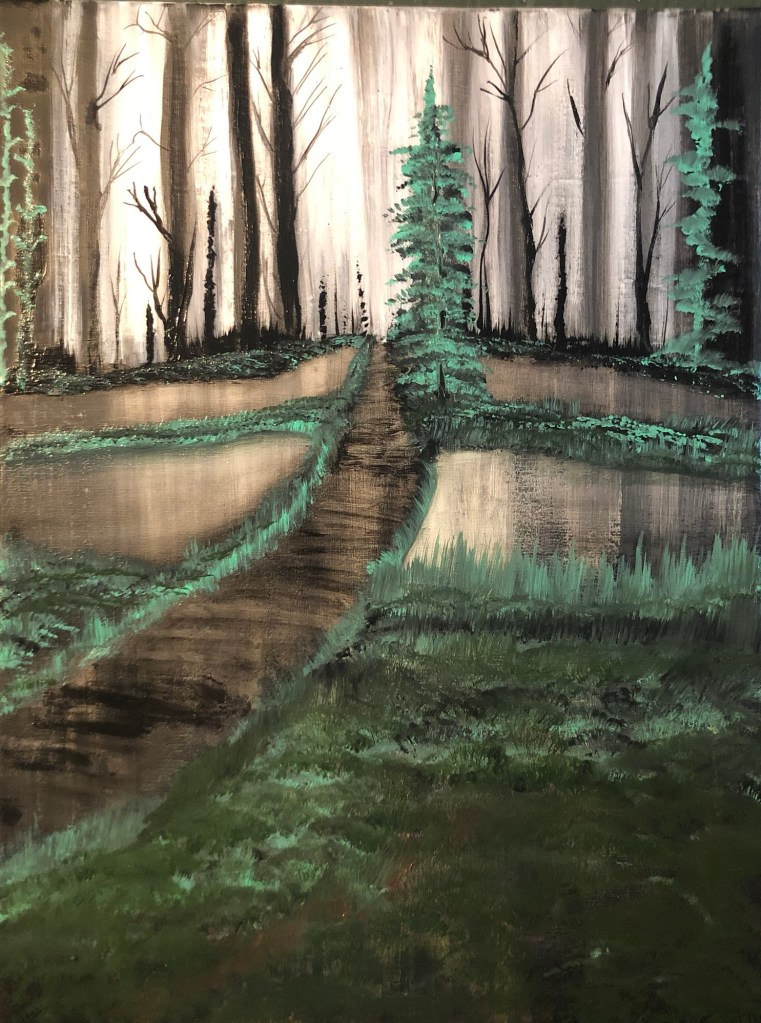
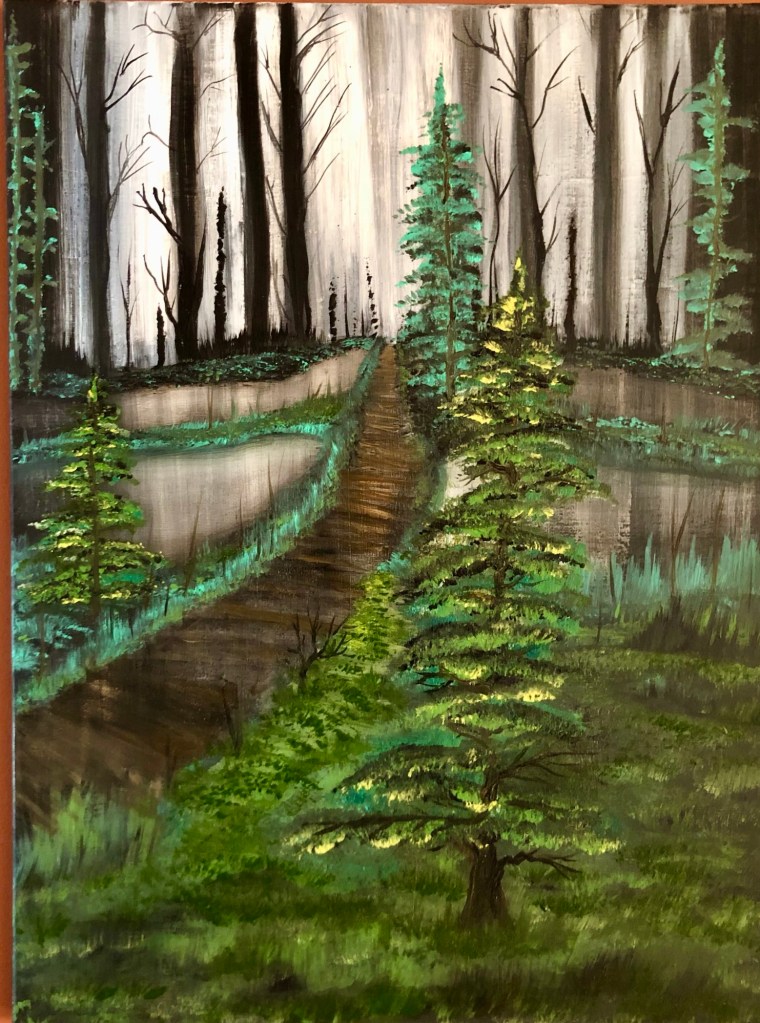
Spruce Bog Boardwalk’ at Algonquin Park Ontario Canada 18×24 Oil on canvas. Painted by Tracy SchruderFinished!
The famous Spruce Bog Boardwalk at Algonquin Park is a 1.5-kilometer loop trail offering an easy hike through a northern Black Spruce bog ecosystem. Key facts include its creation from a glacial event, its unique acidic and nutrient-poor environment, and the special plants and animals, such as the Spruce Grouse, that live there. The trail is wheelchair accessible and open year-round, making it popular for birding and family outings.
What’s the hardest decision you’ve ever had to make? Why?
By Tracy Schruder
The hardest decision I’ve ever made was to stay. I stayed amongst the chaos and the heartbreak. To stay connected to the unconscious realm. I stayed connected with my roots. I even made the decision to stay even when it broke me a bit. I chose to stay when everyone else left, to stay when no one else could work the shift. I chose to stay in my faith when others left me because of it. I stay in the moment to witness it all. I stay without reason, to hold the space for those who need it. I choose to stay in the divine energy of love and wellbeing even when I was being criticized for it. I chose and choose to stay the course.
Why? Because I grew in a state of stay. Everything that did not kill me made me stronger.
I Stayed to feel each sliver in my heart, plucked out by my presence, expecting each wound to slam shut through healing. I chose to feel the pain and do it anyway. I am here and I am who I am because I made the hardest decision to stay. No matter what comes, I stay.
The choking odour of cigarette smoke. 🤢 I am a happy non‑smoker. I used to smoke cigarettes, but I gave them up for several reasons. I escaped free from the brainwashing—and I broke free. Everyone can and should give up this filthy, disgusting thing.
However, I still have ashtrays in my house and family members who smoke. They do their best to take it outside, but on cooler, wetter or snowier days, they smoke indoors. Being a non‑smoker, I can always tell when someone has lit up—even if they light a candle or spray something.
All non‑smokers can smell cigarette smoke, immediately. This is partly because our olfactory system is healthy and we are more sensitive than a smoker whose tiny hairs in the nasal passages are paralyzed by nicotine and tar, etc.
Whenever people smoke in my house, I can still smell it on the furniture, walls, window, etc. It’s a continuous cleanup, but I do it for my health and for the health of my home. Furthermore, I enjoy doing deep cleaning, so it’s going to be done at least twice a month anyway.
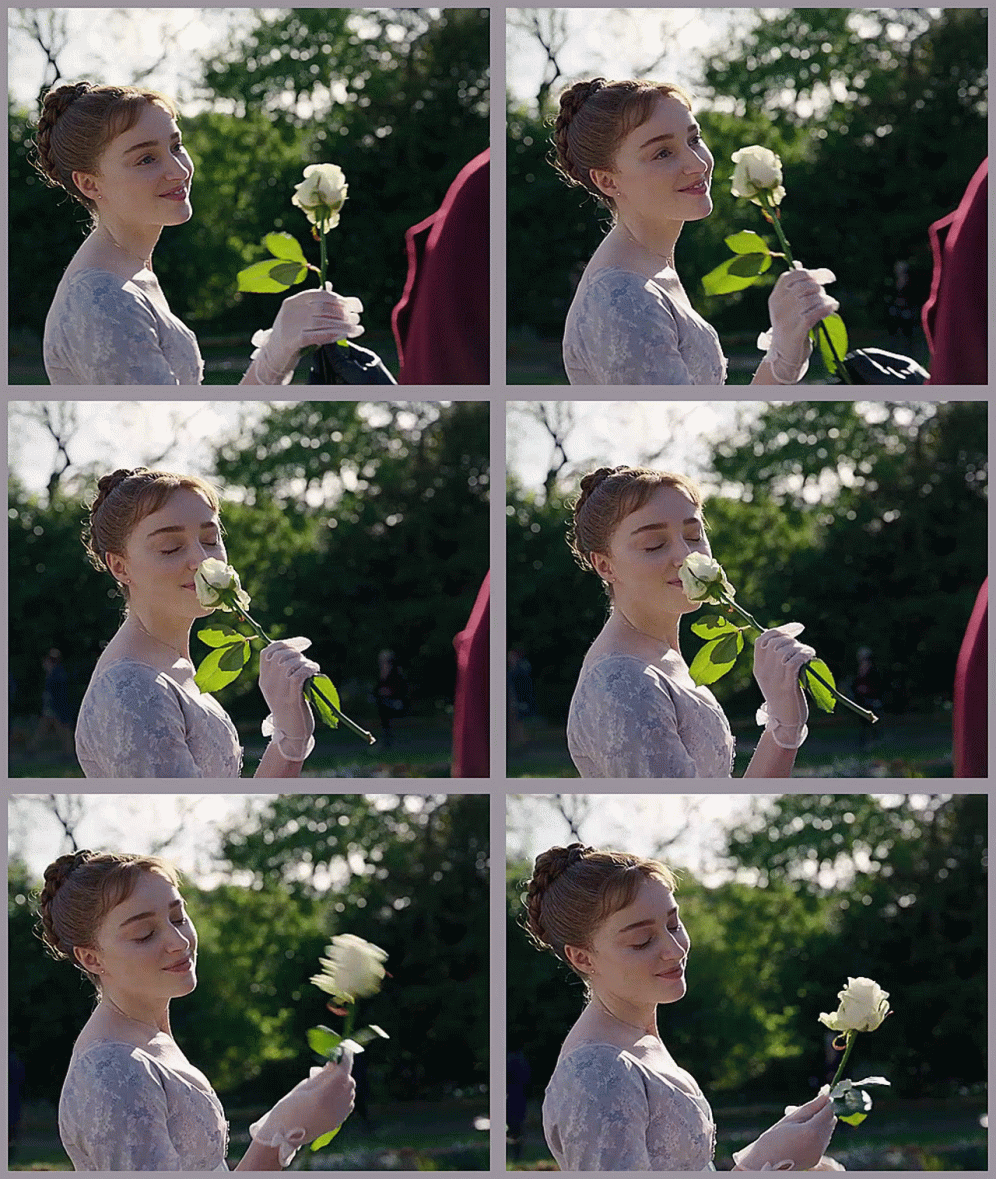
The damage one causes to their sense of smell and taste through smoking is extremely sad. The only good thing about that is if they quit, it will repair itself in time. Regaining my sense of smell after being a smoker was one of the greatest experiences—I smell the flowers again and I’m enjoying every sniff.
Conclusion: You can’t trick a non‑smoker. Please step outside—or even better, quit. Do it for yourself and the people in your life with sensitive sniffers. The nose knows 👃.
If you didn’t need sleep, what would you do with all the extra time?
By Tracy Schruder
What about dreaming? I need dreams. If I’m not sleeping, how could I dream? I’d use my time to learn how to sleep and then teach others how 😉. I enjoy sleeping—shutting down like that is a soft, soothing feeling like no other. It’s the only time we can actually achieve this state. Alpha, Beta, Theta can be reached through deep trance or meditation, but that isn’t true for your average person. For the average person, falling into a deep sleep is the only time they reach these vibrations or states.
Everyone dreams whether they remember the dream or not. It’s not only sleep that is important for our overall mental health—it’s dreaming too. Dream benefits feed imagination, help us identify our senses. Additional benefits of dreaming:
Mental:
Boosts creativity & problem‑solving
Enhances memory consolidation
Supports emotional processing
Emotional:
Helps regulate mood & reduces anxiety
Allows safe rehearsal of fears
Physical:
Strengthens immune function
Supports growth & repair
The living world often leaks into the dream world—or vice versa. Déjà vu is one way in wake, and the feeling during sleep that something isn’t quite real. There are ways you can know you are dreaming, but you can’t control the dream. You can control your reality.
I often stop in my dreams and in my waking life and ask myself, “Am I dreaming right now?” Then I poke my index finger into my left hand. If I’m dreaming, my finger pokes through my palm. This is called lucid dreaming. I have studied this process for a few years now, hence I write of my dream‑journal entries in other blog posts.
I conclude with this: I would find a way to sleep even if I didn’t have to. So I’d sleep if I didn’t have to sleep 😴😂
Can we actually time food preparation with our nose? Knowing when something is finished baking or cooking by smell alone is a wonderful talent to possess. My mom taught me how to bake and cook in this manner. “The nose knows” she used to say.
I remember times when the crackle of the wood blazing in the cook stove meant that there were some wonderful aromas to follow. When mom stoked the stove that full, it meant there was going to be some good old-fashioned baking (from scratch) happening in the house.
We didn’t have a timer for the cook stove oven, but it did have a temperature gauge on the front of it. Mom never needed a timer for baking and cooking. She would sniff the air and say “not yet.”
I enjoyed watching her prepare the pies, cakes, and cookies. Sometimes she would let us kids help. As we got older, she opened up more and shared her secrets with us. She would let us prepare it on our own.
She’d be sporting the “frady eye” if we dare take it out of the oven too early. She taught us about the difference in aroma between an almost-baked and a completely baked good. In most cases, the differences were subtle, but when cooking a roast beef or chicken, the differences were more noticeable.
I use a timer, but not out of necessity because I can tell by the smell when something’s finished. However, I’m a busy lady, and sometimes I need a little reminder. I enjoy impressing dinner guests with my nosy skill. It never fails me.
I mean, you’d have to be hanging on to some sort of inconceivable payoff, to let an annoyance last for more than 12 minutes because after that the body stops producing the hormones associated with that emotion and if you stay annoyed for any amount of time after that, it’s self created.
2. That some people can’t get over themselves:
That some people believe they are entitled to the peeve and reserve the right to their resentment, doing more harm to themselves in the long run. (Letting go is the key to overcoming!)
3. That some people actually complain about things that they can’t control. :
We can never ever change the things we can’t control by complaining about them. Frustration will only build for the lack of a satisfying solution.
Conclusion
My advice, for whatever it’s worth is “don’t let the small stuff take up big time. Annoying things don’t deserve a pinch of coon poop. My favourite mantra for dealing with this in the title on this post “Don’t peeve me off, mandingo!” It makes me laugh- for some reason and things don’t seem so ‘peevey’ afterwards.
Today I’m kicking off “The Nose Knows” series. I will be writing this series of blog posts within which, I dive into the world of scents, aromas and fragrances, the obvious ones and the subtle ones. I will also explore the odours of people, places, and things. I’ll be taking my senses on adventures—in forests, parks, and natural environments. I’ll then shift gears to explore manufactured spaces. My goal is to sharpen my awareness and level up my descriptive writing skills.
I’ll be recording all my experiences derived of my basic rhino-instincts as a human being, in blog posts.
Her Nose Knows
We are either one or the other—a boy or a girl. Our olfactory senses tell us the truth about “who” we are experiencing. We can instinctively tell if someone is either a male or a female by their odours. We can’t help knowing this because it’s in our biological makeup. This is why we can’t fake our gender because consciously or unconsciously, everyone can smell it.
Our sense of smell is closely tied to memory and emotional experiences. When it comes to perceiving differences between people, our brains process a mix of sensory inputs, including scent, appearance, and behavior.
Research suggests that humans can detect certain chemical signals, like pheromones, which may influence how we perceive others. However, these signals are complicated and can be influenced by various factors, including individual experiences and cultural background.
In the context of perceiving differences between people, our noses pick up on subtle cues that are often hard to put into words. These cues can be shaped by a combination of biological, environmental, and social factors.
As a writer, I’ve always been fascinated by the power of scent to evoke emotions and memories. Dianne Ackerman’s book, A Natural History of the Senses, beautifully captures the complexity of our sense of smell and its role in shaping our experiences. I can only hope that I will be able to put my experiences and thoughts into words as elegantly as she has.
Currently, only one person comes to mind when I think of my favorite people – my best friend, Jenny. Jenny and I have been best friends since I was eight years old. She was a new student at our school, and her arrival coincided with the onset of winter. The big hills at our school were covered in snow, and back then, the teachers let us ride our sleds with reckless abandon.
On the day Jenny arrived, I had been playing “queen of the hill,” pushing other kids around and taking their turns on the hill. I wasn’t being nice that day; on the contrary, I was being an enormous brat. That year, I went through at least three best friends, all before November. I wasn’t a good friend or a nice friend, and I often took full advantage of people. I’d convinced myself of my entitlements, and the other girls who were unlucky enough became my best friends or targets, suffered the consequences. I took things from these girls and wouldn’t return them – things like jewelry, toys, or whatever I wanted. This got me in hot water with the parents, and for the most part, these girls were forbidden to hang out with me. I don’t blame them for that.
I was in an angry period of my childhood, and there was so much going on at home that I took it out on people who might otherwise have liked me. So, on the day I ran into Jenny, literally, I was playing queen of the hill. She had cross-checked me and knocked me on my backside, sending sliding down the hill.
She slid down towards me and caught up at the bottom of the hill. Before I was able to catch my breath and struggle back to my feet, she was overtop of me. She jumped on top of me, straddling my waist, putting her knees on my arms so I couldn’t move them. I was furious. I pushed and struggled, but I couldn’t get her off me. I started to pant and cry, screaming at her to get off me. I became aware that she was the new kid, because I had no idea where this girl came from.
She refused to budge off of me until I apologized for being such a brat and agreed to stop bullying everyone. Right then and there I found myself Struggling with my very identity and her strength. it became clear to me that I had to either give in to her or continue to face the humiliation of this situation. I gave in. I yelled my defeated shame-drenched apology out to anyone who could hear it. I had to say it three times Before she let me up, she told me her name was Jenny and asked mine. Stumbling over my whimper and gasp, I responded, “Tracy. My name is Tracy. I’m sorry. Will you please get off me?”
After she got off me, we hung out and talked for the rest of recess. Until Jenny arrived, I was the toughest girl in class. This all changed that day, and being the toughest girl in class no longer mattered to me. I graciously gave it up to her. I guess there’s some truth to – “if you get too big for your britches, there’s always someone bigger that will knock you down to size.” Jenny wasn’t much bigger than me in size but she was bigger than me in heart.
A beautiful yet sometimes painful connection resulted from this. We started hanging around each other every day and on weekends. I met her family, and she met mine. Her mother worked in Ottawa but lived in the country and was looking for a place for Jenny to live throughout the week. I told her that my mom often took in my cousins and other people’s kids temporarily. It was decided that our parents would meet, which was a success, and Jenny and I were happy to be living together, becoming best friends, and all.
She stayed with us for two years, and we had our ups and downs. We broke our friendship several times during those two years, but it ended up being the best friendship of my lifetime. Each year after, until we were fifteen, we spent our summers together. Jenny moved back to Ottawa for a couple of years, so we had month-long visits and did all kinds of fun stuff. Then she moved back to our village, and we saw each other more often.
We grew apart, my house burned down that year, and I left our village. We lost touch and didn’t reconnect until 2009. It didn’t go well, as we both felt a sense of abandonment from each other, and I, of course, was being a brat to her.
I wasn’t yet ready to have a best friend again; I wasn’t in a good place emotionally. She never gave up on me, though. She would send the odd message and check in with me. Her life was good; she had gotten married and had a beautiful daughter. This pushed me further from her because I was grieving the fact that I couldn’t have children myself and was extremely jealous. I’m glad I got to experience this because it helped me realize how ridiculous jealousy is and I was not only able to get over it, I got over my own self, too.
How I see Jenny 😂🥰
A few years flipped by, and I grew up a lot. I learned how to appreciate Jenny, and I finally answered her messages in 2017. Ever since, we’ve been in regular contact. We visit each other every couple of months and have become a great support for each other.
I’m so grateful for Jenny, and she’s my favorite person because of her lifelong commitment to me and her tough but kind nature. I couldn’t imagine my life without her.
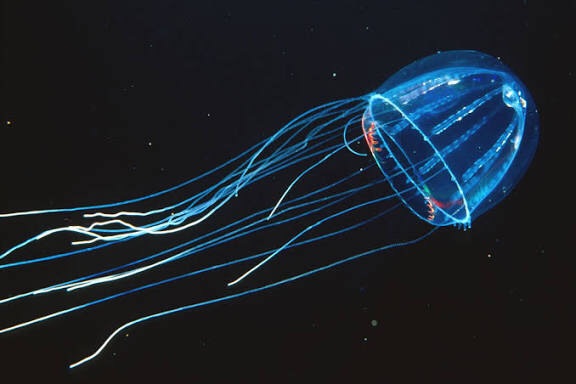
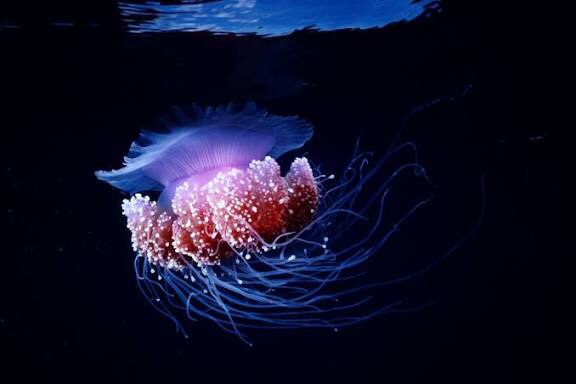
My favorite animals are those that dwell in the depths of the ocean. I’m amazed by their incredible abilities to survive in such extreme conditions.
Complete darkness surrounds these creatures, and the temperature of the water is often just a few degrees above freezing.
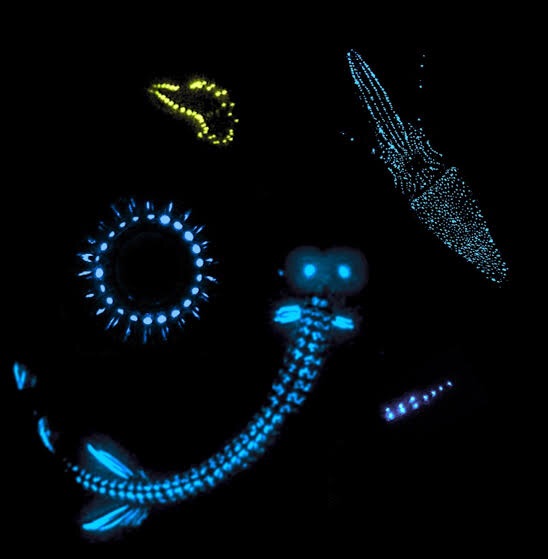
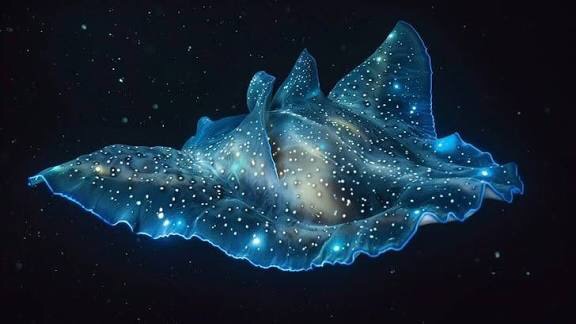
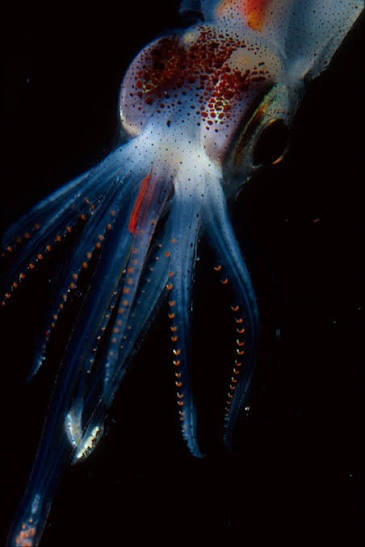
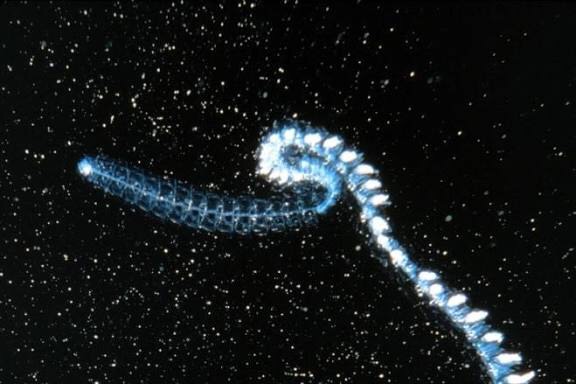
The mystique of their bioluminescence fascinates me to no end. I’ve never been diving, but that doesn’t mean I don’t want to try it someday. I’ve discovered these amazing creatures by watching documentaries such as Blue Planet and television shows like Shark Week, and National Geographic. I can’t forget to include David Attenborough’s nature documentaries.
When I think of being in the depths of the ocean, it sends shivers down my spine. A delicate mix of excitement and fear beckons me to explore the depths.
Some of the creatures that possess bioluminescent properties include:
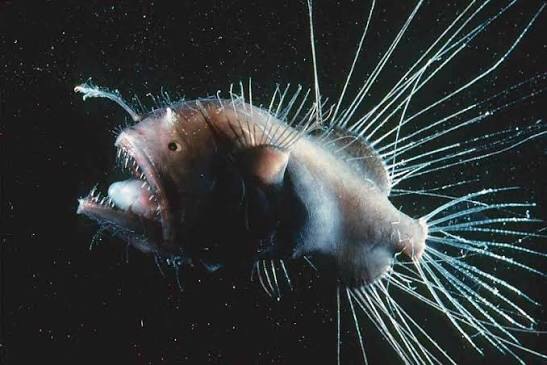
The Anglerfish (Ceratia holboelli): Found in the mesopelagic zone (200-1,000 meters deep), these fish use a bioluminescent lure on their head to attract prey.
The Vampire Squid (Vampyroteuthis infernalis): Living in the oxygen minimum zone (500-1,500 meters deep), this squid uses bioluminescent spots to confuse predators and communicate.
The Lanternfish (Myctophidae): These small fish (found 200-1,000 meters deep) have bioluminescent organs that help them communicate and camouflage.
The Gulper Eel (Eurypharynx pelecanoides): With a massive mouth and bioluminescent organs, this eel (found 500-3,000 meters deep) lures prey into its jaws.
These creatures are just a few examples of the incredible diversity of life in the deep ocean. Their bioluminescence is a testament to the incredible adaptability and resilience of life on Earth.
As I wrap up this post, I’m left wondering what other secrets that the deep ocean holds. The creatures that inhabit this realm are a testament to the incredible diversity and adaptability of life on Earth. Their bioluminescent glow is a reminder of the magic that awaits us in the uncharted depths of our planet.
Maybe someday, I’ll get to experience the thrill of exploring the deep ocean for myself. Until then, I’ll keep exploring through documentaries, books, and the imagination.
The depths of the ocean may be mysterious, but one thing is certain – they’re full of wonder and awe-inspiring beauty.
When it comes to my family and people close to me, I’ve always been considered a “dream weaver.”
I took on this title when I was about eight years old. My cousin Terry-Lynn came down for an after-Christmas visit – we had two weeks off school for Christmas back then, so we’d usually have some cousins stay with us for the last week. We were playing truth or dare when the topic switched to dreams and nightmares.
We shared vivid details of our most joyful and frightening experiences. I revealed a secret: I could wake up from a dream and pick up where I left off when I went back to sleep, recalling every detail as if threading a tapestry of the subconscious. Sometimes, my dreams and nightmares would span days. She called me a “dream weaver.” I liked the term and used it to explain the concept because, for lack of a better word, I had no idea what the heck it was.
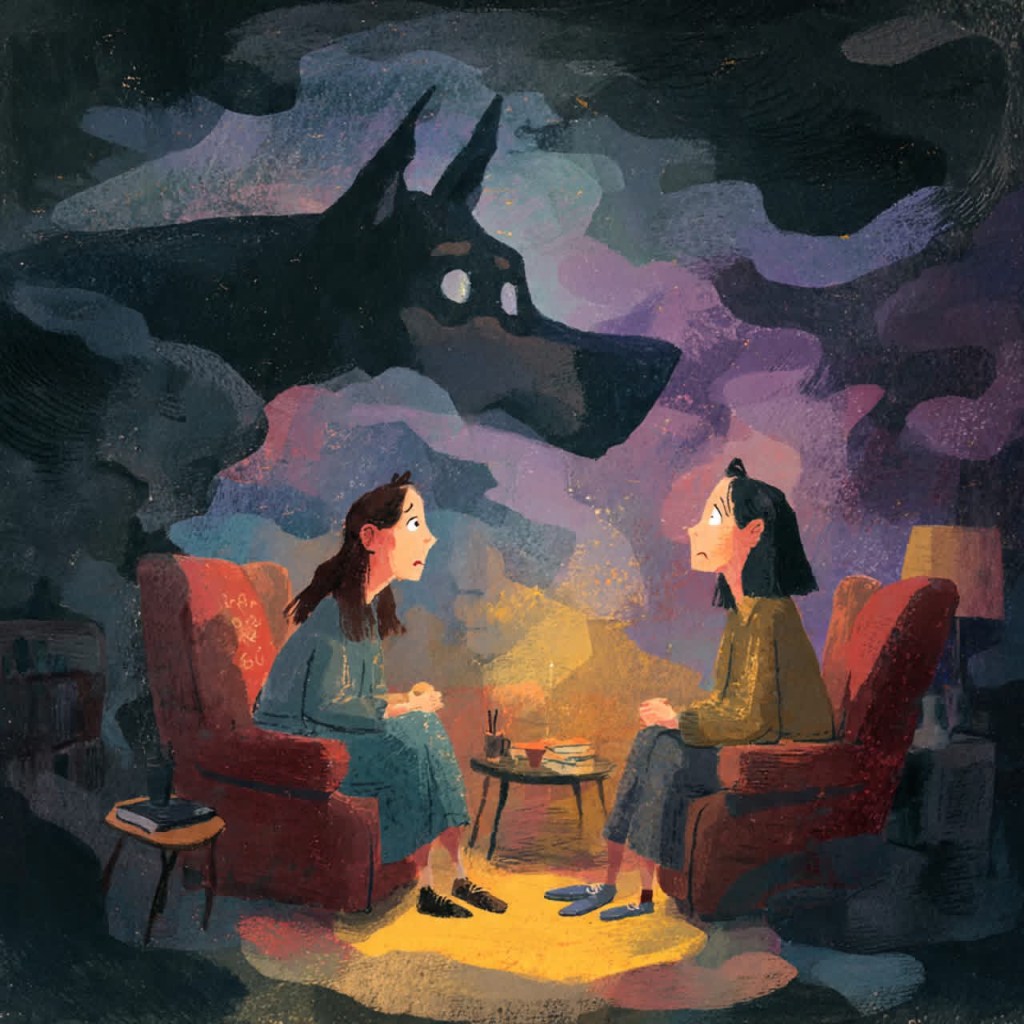
Now, when we talk, she asks, “How’s the dream weaving going? Any more week-long demented dog nightmares?”
With this, she reminds me that she remembers a particularly frightening nightmare I told her about. It went like this ‘There’s a big Doberman Pinscher chasing me through the village. Every now and then, he would catch me and bite me. I would scream, but the force of the wind in my face seemed to muffle my throat. I would struggle free, feeling the pain from the bite. I’m passing my house but unable to find my way to the front door. I keep fleeing the frothing hellhound until he succeeds me again for another chomp.’
This nightmare dragged on for at least seven days, picking up each night where I left off that morning. It was the longest and most exhausting experience that I’ve had with this ability.
Later, after my fear subsided and I became more comfortable with my long journeys, I’d use my dream content to write better stories.
As an adult, I’ve lost some of that skill, but I’m working to get it back. Keeping a dream journal has been a game-changer; sometimes, reading an entry pulls me back in.
It’s fascinating how we “dream weavers” tap into the subconscious with such clarity. It makes you wonder about reality, consciousness, and the mind’s hidden power.




































 tracyschruderblogspot