Author: TracySchruder
-
Where Love is Concerned, Too Much Is not Even Enough
By Tracy Schruder
As we chase our goal of human happiness, one concept stands tall above the rest: unconditional love. This profound acceptance of others, without judgment or expectation, is the highest and most intentional goal for achieving true fulfillment. When we embody unconditional love, we create an environment where individuals feel valued, supported, and empowered to be their authentic selves. In this essay, we will explore the transformative power of unconditional love and the importance of remaining present in our interactions with others.
Unconditional love is not just a feeling, but a conscious choice. It requires us to release our ego’s need to judge, criticize, and control. When we love people unconditionally, we accept them for who they are, without trying to change or manipulate them. This radical acceptance creates a safe space for individuals to express themselves freely, without fear of rejection or condemnation. As a result, they feel seen, heard, and valued, which fosters a deep sense of connection and belonging.
However, unconditional love is not a one-time achievement, but an ongoing process. It demands that we remain present in our conversations and situations while fully engaging with others. We must pay attention when listening to their needs with both our minds and our hearts. When we are present, we are able to respond with empathy, compassion, and gentle understanding. We are not distracted by our own thoughts, biases, or agendas, but rather focused on the person in front of us. This presence is the key to achieving success in giving genuine support, as it allows us to mould our response to the unique needs of the individual.
In a world where judgment, criticism, and division are rampant, unconditional love is a revolutionary act. It challenges us to rethink our assumptions, let go of our need for control, and embrace the beauty of diversity. When we choose to love unconditionally, we create a ripple effect of kindness, compassion, and understanding that can transform our lives and our communities.
In conclusion, where love is concerned, too much isn’t even enough. Is a strong statement that makes us take notice to our scarceness of knowledge on the subject of love. Unconditional love and nonjudgmental acceptance of one another, is the highest and most intentional goal for human happiness. By remaining present in our conversations and diverse situations, we can create a safe space for others to thrive. As we embody unconditional love, we become instruments of transformation, spreading love, kindness, and compassion to all those around us.
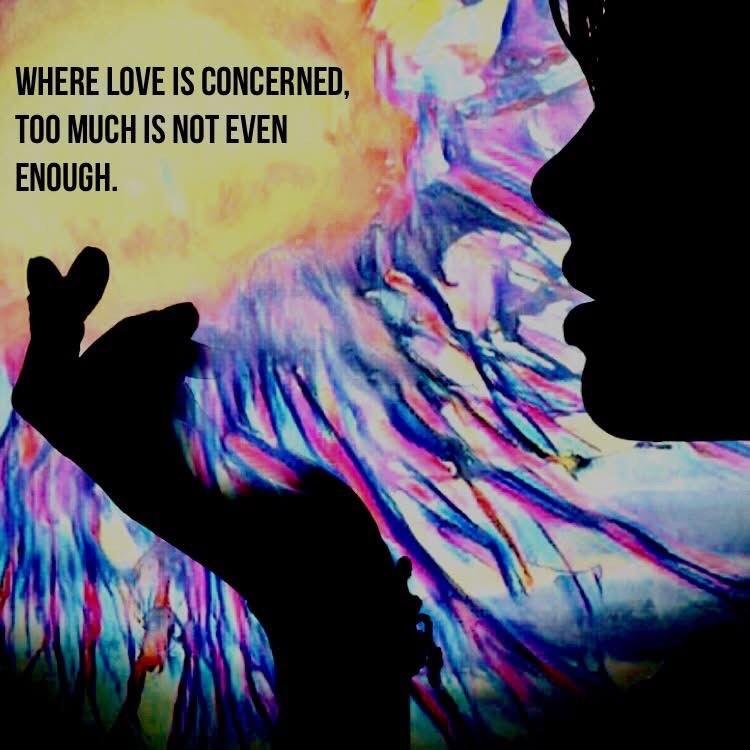
Where love is concerned, too much is not even enough. -
The Child-Free Life: Navigating Family, Society, and Self
By Tracy Schruder
Some truth about living the ‘childfree’ life from an expert.
As I sit here, reflecting on my life’s journey, I am reminded of the profound impact that being unable to have children has had on my life. It’s a reality that has woven a complex tapestry of emotions, challenging my sense of identity, family dynamics, and societal expectations.
Holidays, once a time for joy and connection, now feel like a painful reminder of what I’m missing. Every gathering is centered around the kids, leaving me feeling like an outsider, a spectator in a life I’m not living. The excitement and laughter of children’s voices, the pride and joy in parents’ eyes, has been bittersweet experience that I’ve learned to navigate with a mix of sadness and gratitude.
But what’s even more challenging is the secrecy and exclusion that often accompanies my childlessness. Family members and friends will sometimes whisper to each other, keeping secrets from me, under the guise of not wanting to hurt my feelings. It’s a well-intentioned but misguided attempt to protect me, leaving me feeling isolated and disconnected.
Society’s expectations can be just as painful. People will often ask, “When are you having kids?” or “Don’t you want to be a mom?”
(questions that assume I had a choice)
The implication is that I’m not doing my part, that I’m somehow less of a woman or less of a person because I don’t have children. It’s a stigma that’s hard to shake, a constant reminder that I don’t fit the mold.
As a result, I’ve lost touch with some distant family members, who seem to have lost interest in me now that I don’t have kids to connect with their own. It’s a painful realization that my worth and value are tied to my ability to produce offspring. I’ve even discovered that I have aunts and uncles with children I’ve never met, a reminder that family can be complicated and that connections can be fragile.
The emotional toll of all this cannot be overstated. There have been times when I felt like I was drowning in a sea of sadness, like I was losing myself in the process of trying to navigate this childless life. But as I’ve grown older and wiser, I’ve come to realize that this experience has also been a catalyst for growth and transformation.
It’s forced me to awaken to the present moment, to find meaning and purpose in the here and now. I’ve learned to cherish my art and my writing and to respect them. I treat each finished canvas or pice of writing as they are delicate creations of my soul.
I’ve discovered that I am more than my ability to have children, that I am a complex and multifaceted person with so much to offer the world. I’m childfree and I’m going to capitalize on every benefit that it affords me.
In the end, my childlessness has been a journey of self-discovery and transformation. It’s taught me to be resilient, to find joy in the unexpected, and to cherish the beauty of the present moment. I am not my circumstances; I am a strong, capable, and creative woman, worthy of love and respect, regardless of my ability to have children.
-
Dealing With Down Days: Embracing the Unpredictability of Life
By Tracy Schruder
As humans, we’re often led to believe that achieving a state of enlightenment or presence means we’ll be immune to life’s challenges. However, the truth is that no matter how spiritually evolved we may be, we’re still susceptible to down days. These days can be triggered by the smallest, most unexpected things like a thoughtless comment, a disregard for our boundaries, or even just a bad night’s sleep.
Energy Zappers
There are certain individuals and situations that can drain our energy without us even realizing it. People who consistently disregard our time, energy, and boundaries can be particularly challenging to deal with. Those who take without giving, who never express gratitude, and who prioritize their own needs above everyone else’s can leave us feeling depleted and resentful.
There is Importance in Self-Awareness
Recognizing when we’re feeling drained and identifying the sources of that drain is crucial. It’s essential to acknowledge that our energy is finite and that we need to prioritize our own needs to maintain our well-being. This means setting healthy boundaries, learning to say no, and surrounding ourselves with people who uplift and support us.
When We Dig Deeper We Find Inner Peace
So, how do we deal with these down days and the energy zappers that come with them? The answer lies in digging deeper, meditating deeper, and becoming more present and positive. Here are a few strategies that can help:
Mindfulness and Meditation
Taking the time to quiet our minds and tune into our inner selves can be incredibly powerful. Regular mindfulness practice can help us develop greater self-awareness, allowing us to recognize when we’re feeling drained and take steps to replenish our energy.
Gratitude Practice
Focusing on the things we’re grateful for can help shift our perspective and attract more positivity into our lives. Take a few minutes each day to reflect on the good things that have happened, no matter how small they may seem.
Self-Care
Prioritize activities that nourish our minds, bodies, and souls. This might include exercise, spending time in nature, reading, or simply taking a relaxing bath.
Reframing Negative Thoughts
Challenge negative self-talk and reframe unhelpful thoughts. Instead of dwelling on the things that are going wrong, focus on finding solutions and silver linings.
Embrace Our Imperfection
Recognize that it’s okay to not be okay. We’re human, and it’s natural to experience a range of emotions. Rather than beating ourselves up over our imperfections, let’s learn to accept and love ourselves exactly as we are.
In the end
Down days are an inevitable part of life, but they don’t have to define us. By acknowledging our limitations, prioritizing our own needs, and cultivating greater self-awareness, we can learn to navigate even the most challenging situations with greater ease and resilience. So, the next time you’re faced with an energy zapper or a down day, remember to dig deeper, meditate deeper, and find the lesson in the experience.
-
What makes a good leader?
The type of person that makes a good leader is a confident, conscious and compassionate person. They must possess a desire to do the best for all people involved.
 tracyschruderblogspot